Writing my first letter

A visit with my grandmother

Writing My First Letter

Nana is dancing in the kitchen, frying weenies for dinner.    The weenies are sizzling in the black iron frying pan, with steam and stinging droplets of fat rising from it. She  is doing a little jig, and poking the weenies with a pancake turner.  I am standing in the doorway in my quilted robe and slippers, and just came from the hall which has the floor heater, standing over it and letting it blow warm air up my legs.  Sunlight pours from the window in the bathroom into the hall behind me, but the kitchen is in shadow, and is cooler.  The old black telephone is on the hall table, and if it rings, Nana will come to answer it.  Popie, my aunt, has gone to work at the high school, and we are at home this morning, just the two of us.  Later we may go to town.  I have come to spend a few days at my grandmother’s house.  

Nana came to get me, over the mountain from our house in Fillmore, to bring me to visit her and my aunt at the farm.  

She has me sit at the Mexican table in the breakfast room to write a letter to my parents.  She has bought me some wonderful stationery, with yellow ducks marching along the bottom of the page, and it has lines, so I can practice writing.  I copy the letters she shows me.  I ask her to help me compose this letter; 

“Dear Mommy and Daddy,” ( It takes an eternity and half a page to write that ).  “I am having fun with Nana”.   (This takes another half a page and a lot of time, but it is legible! ). “Love, Tina.”

Nana is going to take me with her later to the P.O. and she will address this first letter I have written, and put a stamp on it.  I feel so grown up, so wonderful, to be able to put words on paper, above that line of yellow ducks.

I am happy we are getting to eat weenie sandwiches for lunch.  I love them, half-charred, and covered with mustard.  My grandmother carefully cuts them vertically down the middle, and splays them so that the flat edges of the insides get braised in the frying pan.  She presses on the rounded outer sides of the twin halves with the pancake turner.  They want to curl up, but she keeps them flat.  

The bright yellow mustard is the same color as the yellow ducks on the child’s stationery with the wide lines.  We eat in the breakfast room, redolent of smoke and bright Mexican blue— the walls, the chairs and the table, although it is covered by a red tablecloth, and there are little red flowers painted on the cross-bars of the chair backs.  

My grandmother is laughing and cheerful, and the house is peaceful and warm.  Nana drove to Fillmore to get me, to bring me to her house.  I am not sure why my sister didn’t get to come too, but I am glad to be getting my grandmother’s full attention.  When Popie gets home, we will do something together, the 3 of us.  I am a very happy child.  Nana and I sing little songs, like “Twinkle, Twinkle little star.”  I can’t remember all the little songs, but I am familiar with them, and chime in when I can.  I love to hear my grandmother sing.  

Lying in a Hammock at William Duffy’s Farm in Pine Island, Minnesota by James Wright

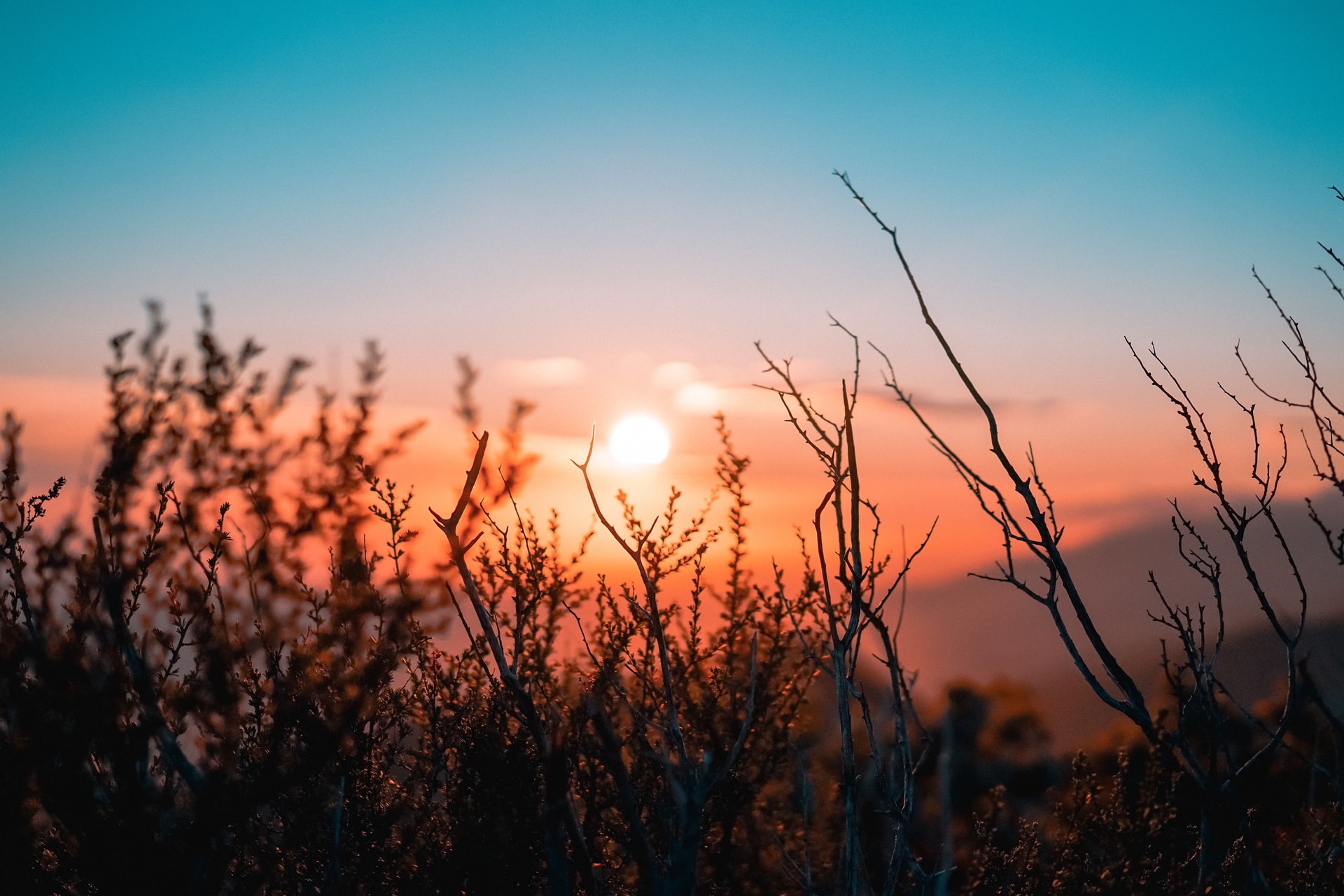
The quiet and beauty are what we need to be able to heal. We are in existential dread with the sweltering heat, scared of a future of more climate change. I want to hear the cows on the hillside, and feel the air dancing the ginko leaves!

janfalls's avatarHeart Poems

Over my head, I see the bronze butterfly,
Asleep on the black trunk,
Blowing like a leaf in green shadow.
Down the ravine behind the empty house,
The cowbells follow one another
Into the distances of the afternoon.
To my right,
In a field of sunlight between two pines,
The droppings of last year’s horses
Blaze up into golden stones.
I lean back, as the evening darkens and comes on.
A chicken hawk floats over, looking for home.
I have wasted my life.

Lying in a Hammock

When I first read Wright’s poem, enticed by the title, I came to the end and broke into smiles. I realize it may not strike you this way. Certainly that last line is an abrupt turn around from all the gorgeous pastoral images – butterfly, leaf, cowbells, sunlight, golden stones, a chicken hawk floats over. What does he mean?

I’m not going…

View original post 176 more words

The Divine Touch – A Sermon On Mark 5:21-43

This is a very beautiful meditation on the power of touch. It is a remedy for so much of the isolation we have been feeling!

Michael K. Marsh's avatarInterrupting the Silence

Fifth Sunday after Pentecost, Proper 8, Year B – Mark 5:21-43

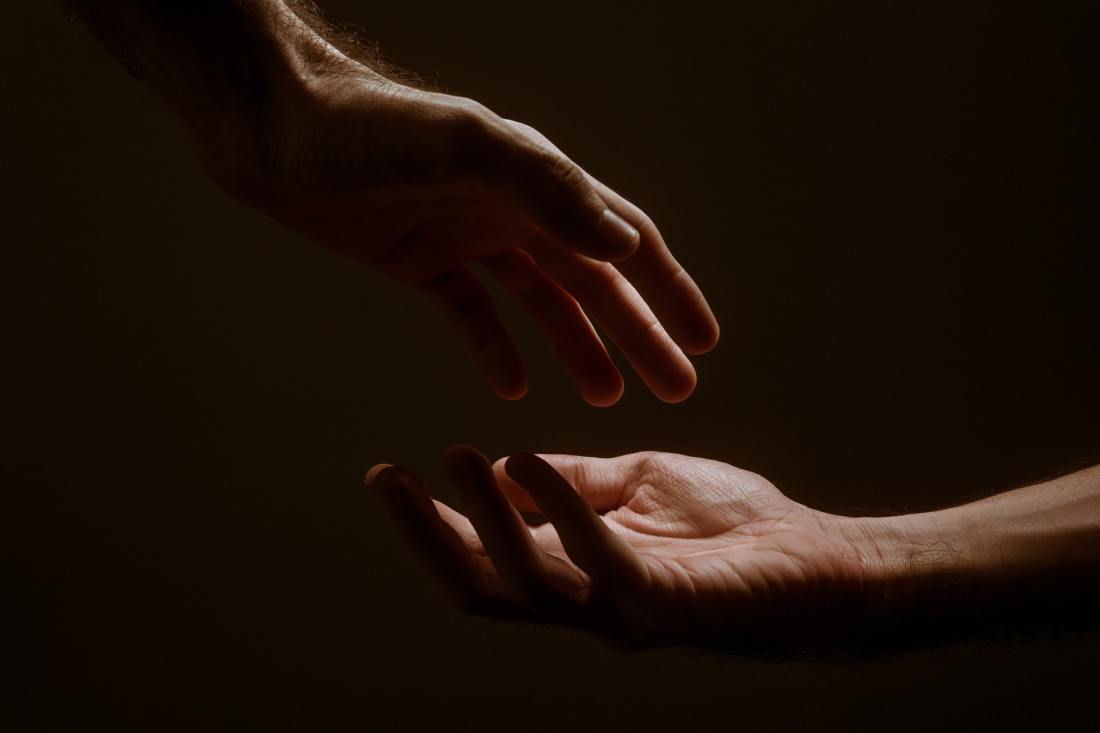
I’m usually the one that drives when my wife, Cyndy, and I go somewhere. If we’re going further than a few blocks I almost always roll up the sleeve of my right arm, lay my hand in her lap, and say, “Would you rub my little arm please?”

On the one hand it just feels good and I like it. On the other hand it’s about so much more. I want to be touched. I want to be seen, recognized. I want to be reminded that I am real and that I matter. I want to feel connected to someone and something beyond myself.

“Would you rub my little arm?” She’s heard it a million times. I don’t think I am the only one that asks that. I think all of us, in…

View original post 1,564 more words

So last night I watched the movie “The Social Dilemma” and came to the conclusion which I reached 50 years ago, that we have to “solve one damn problem after another” trying to make the world a better place, rather than trying to make money. If you were wondering about how you can make a difference, in trying to stop Nestle and other big companies from privatizing the water supply of the whole world, leaving millions of people to die of thirst, here is an answer: Charity: Water. Every penny goes to helping bring clean drinking water to small villages all over the world. They have a separate business for generating the plans, engineering, and support system, so that every donated penny goes to getting the water to the people. You can give $5 a month, or more. It is easy to do. I watched their ad, the night I was watching Midnight mass from the Vatican, and they are a total inspiration. I wrote a poem about it. “WATER FROM THE SPOUT” Little faces lit with joy, as they put their whole heads under the spigot, and their hands, eagerly cupped to catch the clean sparkling water as it pours generously, dancingly, a ribbon of miracles, continuously from the pipe.
 Water (the Health Inspector says:) So the baby will not get dysentery, so the mother can wash the clothes, so the children can go to school, and not be thirsty, Or nauseated, or anemic, because of amoebas and worms, because of this new spigot, because of the gift of the well, drilled by someone who wanted to be of service, to make a real difference: A miracle in the desert. Water They have seen only mud holes, wet by opaque brown water, glaucous as a cataract, full of bugs, where animals have washed, and drunk after walking through the dust, toward the pond which seemed a mirage, there are footprints all around the slimy rim. Dancing down the road, these strong children carried on their heads big oil drums and plastic containers full of contaminated water, for miles, their feet dusty and hardened by walking on the earth with bare feet, singing and flashing their smiles, on their daily walk from the mud puddles, back to their homes. Water. They laugh, they sing, watching the clear, clean water splashing from the pipe. The well is in the middle of the village, women come with their baskets. full of clean washed clothes, children play in the open air, their voices full of excitement and joy, their hands clapping and touching, clean hands and clean faces, bright smiles of happiness, Water!

Unless … – A Sermon On John 12:20-33

This is a beautiful and compelling reflection on the word “unless”. Where we put conditions and blocks to faith and to personally bending our will to try to do the will of the One who created us.

Michael K. Marsh's avatarInterrupting the Silence

Fifth Sunday in Lent, Year B – John 12:20-33

“Unless a grain of wheat ….”

Last week I spoke with you about the contradictions in our lives, the many ways in which we contradict ourselves through our thoughts, words, and actions. Today I want to talk with you about the conditionals in our lives, the “unlesses” with which we live. I don’t know if “unlesses” is a real word but I am using it as one today. It’s a noun and the plural of unless. 

We all have our “unlesses.” They are lenses through which we see. They are the restrictions, limitations, and conditions that shape and inform our relationships and understanding of each other, Jesus, and ourselves.

Let me give you some examples of the “unlesses” that I’ve either heard from others or lived with in…

View original post 1,147 more words

when we get through this Maya Stein

wonderful poem for coming out from under the pandemic, into Spring!

janfalls's avatarHeart Poems

When we get through this, I want us to set a table with all of the loaves of bread
we’d practiced in our quiet houses. I want us clutching fistfuls of the cilantro we coaxed
from our city windowsills, and I want the nascent musicians, the ones who learned
old songs on their new ukuleles, or warbled choruses on isolated balconies, to take
the stage together. I want all the knitted, crocheted, stitched, and mended things pooled
at our feet, warming our ankles. I want us to greet each other in unfamiliar languages,
to tell the stories of those who have been lost. I want us to look, in unison,
toward the world millions of miles and light-years away, to take in what is before us,
and beyond us. I want us to wake to the magnitude of our fortune against the smallness
of our time. And then I want…

View original post 279 more words

Prince Caspian

(Book 2 in the Chronicles of Narnia, by C.S. Lewis)

The Chronicles of Narnia are some of my favorite books. (I also love the Oz books). I got the Prince Caspian second book, on audio, because of the headache I got from the vaccine, so I was delighted to have someone read to me. It turns out that the wonderful voice reading the story is Lynn Redgrave. I highly recommend all the books, but this is one of my favorites! I love Narnia, and I go back and read the books every few years, when I have forgotten the stories, but sort of remember the general gist. I had forgotten that the woods come to help fight the great battle against the Telmarines, and that the trees wade in the earth, as they come forward. Maybe this is a bit of extension of the metaphor from Shakespeare in Macbeth– “til Burnham woods do come to Dunsinane”. CS Lewis has a wonderful imagination, and I believe there is a deep consciousness of good and evil in the stories. I had not realized until reading the book “Becoming Mrs. Lewis” that he fought in WW1, in the Somme, at age 19. His experience of war and probably also of the despair and PTSD of being a soldier in that disastrous event shaped his whole later life. I think the story where Lucy is the only one who can SEE Aslan, because she happens to be the youngest, is poignant. AND I LOVE Trufflehunter, the badger, who says that the animals don’t change, they stay loyal and true. Where others can betray and switch sides because they seem to see a new advantage, he stays loyal and true all the way through. It is a great book!

Context and meaning in the delivery of news

During the past year, as the administration of Mr. Trump made more and more threats to the ongoing function of our government, one critically important voice for me was Heather Cox Richardson. This teacher of American History who wrote and spoke daily from her home in Maine, in her “Letters from an American,” helped give us vital information, with footnotes, and with context, throughout the pandemic and through the daily punches in the gut which we had to endure.

Context matters. History matters. We need to understand what is happening, leaning on people who are able to put it in context. Heather Cox Richardson is a history professor, with expertise and depth in understanding what happened in our country after the Civil War. What is out there in the visual media world is not the same as what is being written. We are being swamped with advertising which distracts, by media which calls itself entertainment so they can’t be sued for twisting the news all our of shape, and a lot of crazy-people with big mouths. There are people who know how to distort and change visual images, so you can not know if what you see is real unless people who were there tell you it is true. Reading what someone who is knowledgeable has reflected on, gives us a bit of time, context, precedent, and meaning. It also matters that they CARE about our country. The movie “Social Dilemma” about what FB and other big internet advertising engines do shows us that we can generate a Civil War in 6 months, by turning your beliefs toward conspiracies, fear, anxiety, self-doubt. In order to have a real chance at building a stronger multi-cultural Democracy and world, we have to listen to each other, trust our elected officials, and continue to care about participating in our governmental decisions. If we cannot work together, we are going to destroy each other and the world. Everything we do now has to be aimed at learning to work together for the common good.