Facing Our Greatest Temptation – A Sermon On Luke 4:1-13

I love this, because it is about going deeper into who we really are, not settling for a more shallow self-understanding. Being called, and responding from the depths.

Michael K. Marsh's avatarInterrupting the Silence

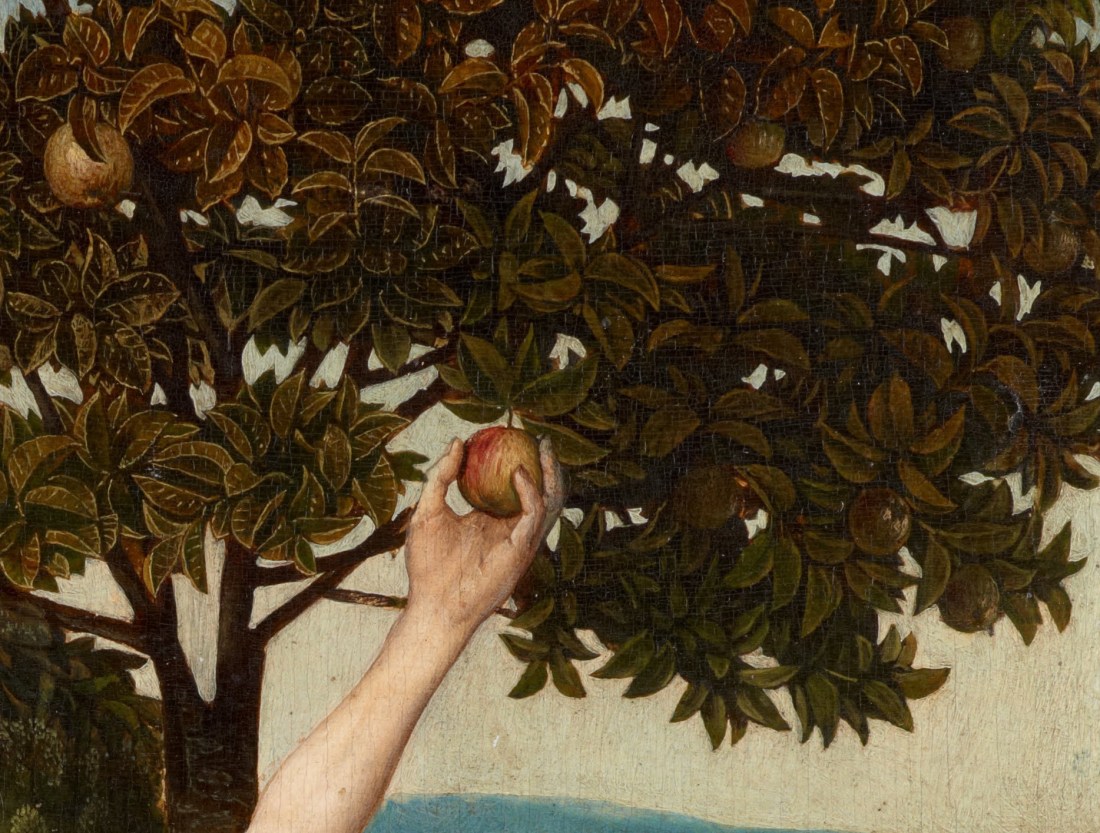
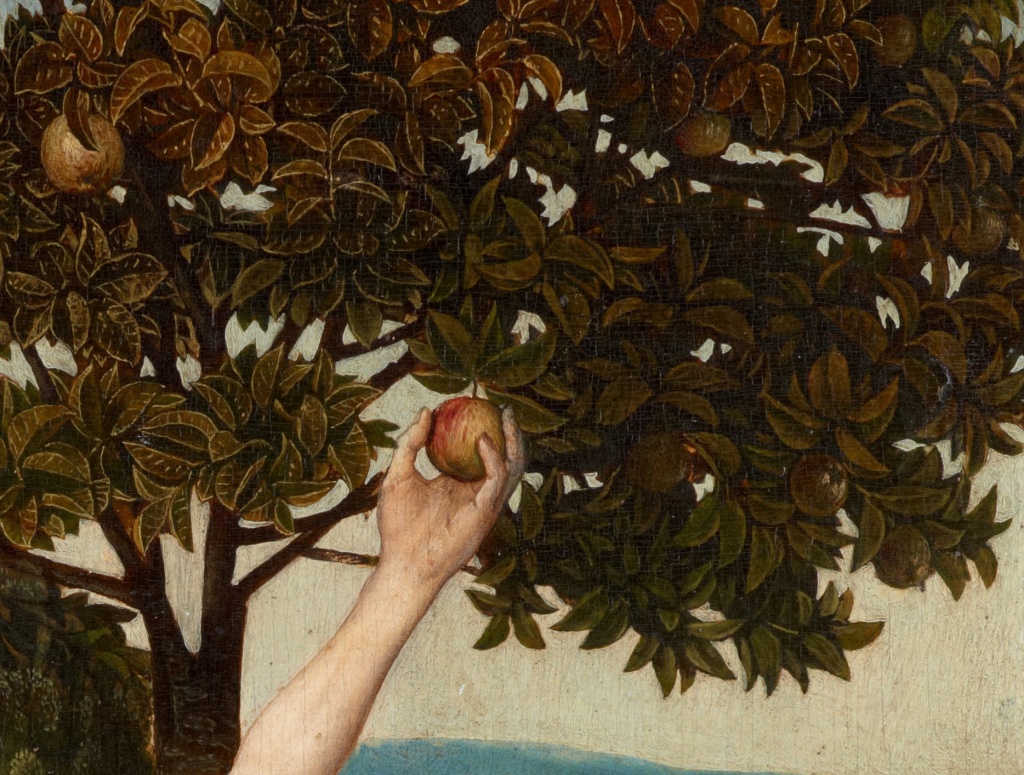
Detail of the Fall of Man by By Hugo van der Goes, Public Domain, Wikimedia Commons

What comes to mind when you think about temptation? What tempts you? What is your greatest temptation today?  

I ask those questions because I think what we often call a temptation isn’t really a temptation. We often think about temptations as a struggle between ourselves and some other thing or person. We’re tempted to have another glass of wine or a second dessert. We’re tempted to give him or her a piece of our mind. We’re tempted to cheat on our taxes or tell a lie. We’re tempted by an attractive woman or man.

Those might be bad decisions, and we should probably say no, but I’m not sure they are temptations. I’ve begun to realize that my temptations aren’t a struggle between me and some other thing or person. They are a…

View original post 1,081 more words

Mortality And The Fragility Of Life – An Ash Wednesday Sermon On Matthew 6:1-6, 16-21

This is wonderful, recognizing we are fragile, life is uncertain, but also that we hold treasures, in our earthenware selves.

Michael K. Marsh's avatarInterrupting the Silence

Ash Wednesday – Matthew 6:1-6, 16-21

A couple of months ago I stopped at McDonald’s early one morning to get a cup of coffee. And the young woman who waited on me, who looked all of about fifteen, smiled and said, “Sir, after your senior citizen discount it will be $1.56.” I had not asked for a discount. I did not know my mortality was showing.

I now regularly get letters from AARP, each one reminding me of my age. I am pretty sure that I do not yet qualify for the senior citizen discount or need AARP. And yet I’m also sure that life is fragile and mortality is real. I’ve experienced that in so many ways and I’ll bet you have too.

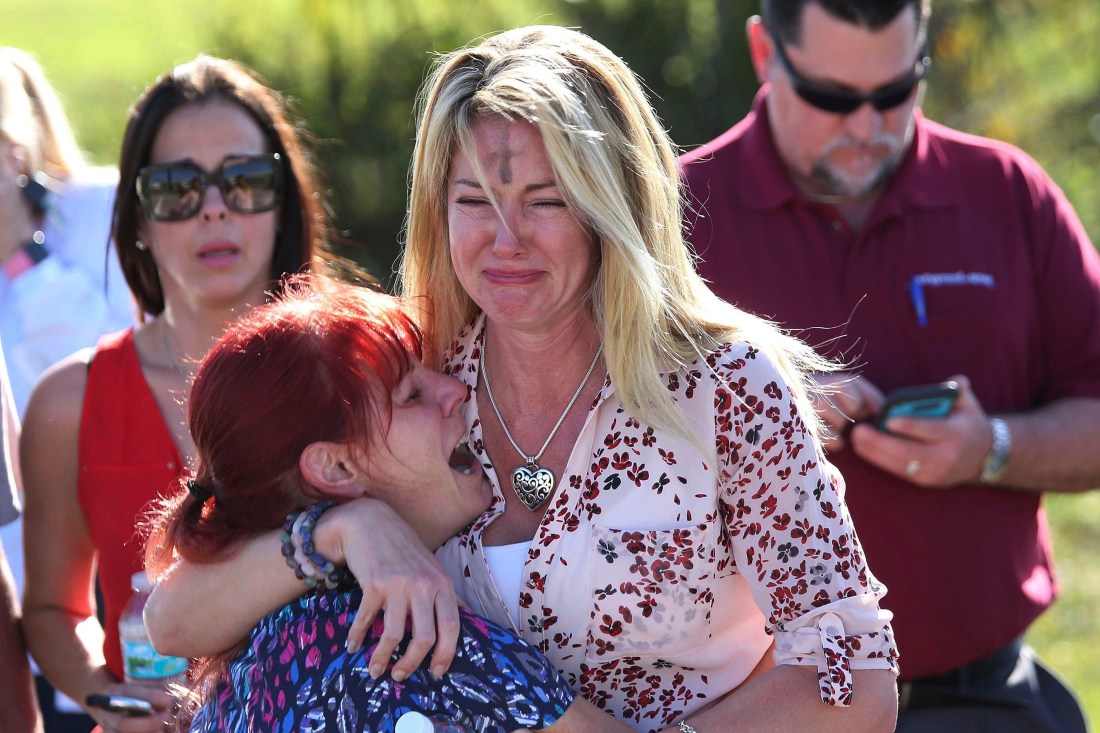
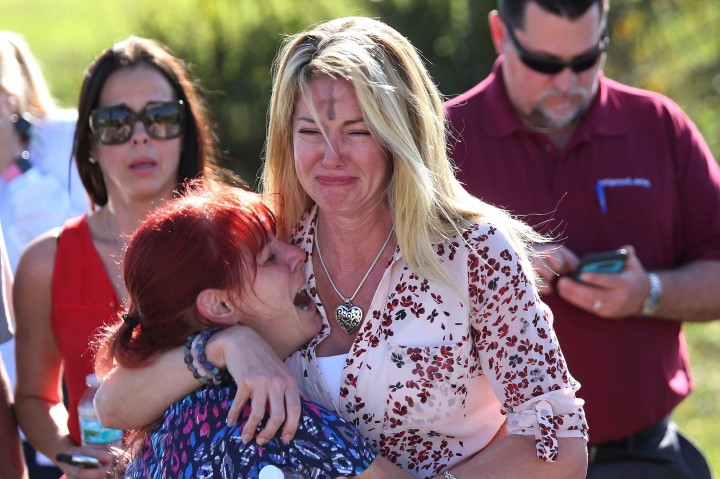
Ash Wednesday, Morality, Death, Resurrection, Sermon, Florida Shooting, Matthew 6:1-6 16-21 Parents wait for news after reports of a shooting at Marjory Stoneman Douglas High School in Parkland, Fla., on Wednesday, Feb. 14, 2018. (AP Photo/Joel Auerbach ©…

View original post 1,360 more words

Paul Farmer MD

The Anthropology of Affliction

 I have had to grapple with the image of such a magnificent human being, most of my medical life.  I couldn’t be what he was.   He was stellar in every way.  He could function on almost no sleep, and had the vise-like grip of a photographic memory and the ability to brilliantly work out both diagnosis and treatment plan while holding the patient’s hand and asking them what they ate for breakfast, and who took care of them and brought them to the clinic.  And also figuring out how to get the medicine he intended to prescribe delivered to the patient.   He understood poverty and illness, he understood that the sick are poor, and the poor are sick. The book Mountains Beyond Mountains, about Paul’s life, came out in 2003. I was in the Peace Corps in South America from 1972-74. I started practicing OB-Gyn in 1990. I did not have his personal charismatic model or his ability to use the language of liberation theology in the early years. But once I knew about him, I knew he existed, and that his way was TRUE. It was ballast against all that is wrong in medicine, and all the barriers society sets up. I truly hope, as did his college roommate John Dear, that he is canonized, and also named a Doctor of the Church. Because he changed the world! And he did it like St. Francis did– with love and joy, not out of a sense of duty. I loved that he said he could sleep when he got to Cuba, because everyone there had a doctor. Having a doctor you could call on was the gist of what he wanted to make possible. And a good doctor, who wanted to save your life, with dedication and compassion.
He grew up in poverty, living on a bus his dad drove around,  for a lot of his childhood.  That he made it to Duke and then Harvard was a miracle.  He didn’t get to go to Vienna.  He didn’t study music or go to the opera.  His friends were the best in each field, and the most creative minds in our time, full of passionate energy.    
But we are not called to be who he was, we are just called to be inspired by him; to allow what he showed us about how we could be more fully human, more engaged and compassionate.  One of the most poignant chapters in Mountains beyond Mountains is when he marries Didi, and they have a child, and he says to himself that he must not love his own child more than all the children he has cared for.  He grapples with the limits of how much we can love, and whether we can morally love our own families more. And I learned from that question that we all have to love whom we love, the best we can.  Simply trying to do the best we can, without judging ourselves, without torturing ourselves with questions about quantity and quality.  I think his faith was what gave him the ground for those decisions, to just do the best we can.  Putting the outcome in God’s hands, but doing the best we can.  He didn’t waste time with second-guessing and self-doubt.  He understood very truly the limits we all have to function within.  He had enormous energy, and some people don’t have even a quarter of what he had.  But they are just called to be who THEY are, not to be something different.  That was part of his brilliance.  Jim Kim was a strategic systems thinker, and he could see the way through, to get the medications made in a less-expensive way.  He wasn’t focused on the individual patient the way Paul was, and it was brilliant that he did what HE could do to help.  It changed the world!  

Paul inspired each person to give what they could give.  It was like loaves and fishes, in so many ways.  Here is the poem I wrote about the work Jim Kim MD did in the Siberian prison camps, where both TB and AIDS were rampant, and the Soviets didn’t want to have to spend money to treat prisoners. A travel fluke made him have to deal with the Russian generals, instead of Paul. He had a karaoke machine, and he sang to them!


THE SNGING GULAGMEISTERS

(For Jim Kim, MD)

They were swilling vodka

And cared nothing for the Siberian prisoners.

It was winter

Like Varykino in Doctor Zhivago

Snow-lace and bear rugs

Wolves howling in the foothills.

He brought out the karaoke machine, 

And hoped for the best;

Flushed with vodka, 

Singing “My Way” with the Sinatra swing.

While spreadin’ the news,

Death and dyin’;

Grim not glamorous;

Siberian prisons

Full of T.B.

He wanted to treat the prisoners

On behalf of mankind, 

He sang to the generals.

Men in olive drab,

With chests full of medals

And flushed cheeks

Began to join the minister,

Whose clear baritone

Led them in a Russian ballad, 

Answering song for song;

And a miracle happened.

They said yes, 

To this most improbable idea;

Treating the prisoners with T.B.

In the gulags, 

Something good for this Earth.

Published in 2007, in Walking on Stars and Water, by Martina NIcholson MD

(available on Kindle, or contact me for a book)

THE DEATH OF THE MANGO LADY

(FOR PAUL FARMER, MD)

The ladies in the little overturned truck

Spilled like mangos onto the road.

The mangos, in rainbow sherbet colors,

Like sunrise and sunset in Haiti,

Spilled out all over the road,

Spilled and splattered open,

Their soft apricot and coral juicy flesh

Sweetening the dust,

A whole months’ wages lost.

Grangou, grangou:  hungry children

Scrambled to retrieve the unbroken ones;

And the mango ladies

Holding their moaning mouths

Watched

The driver lay a piece of cardboard

Over the body of their friend,

Her legs and feet still uncovered.

Surrounded by mangos,

An altar offering– 

Fruit of the world, 

Suffering of the world,

Women on their way to market
Waylaid by death.  

Squatting by the roadside,

Watched by the hungry children,

Moaning;

Stopping the rhythm of daily life

Trying  to get enough

Food for the children;

Stopping to grieve,

Broken open 

Like sunrise and sunset

All over the dusty road.

Published in Walking on Stars and Water, 2007, by Martina Nicholson MD

DONKEY AMBULANCE

(FOR PAUL FARMER, MD)

Whimpering whispering,
”I am sick, I am hungry”

 Rises like steam from 

The not fast ambulance, as it  

Comes toward us with the child-woman 

Groaning and vomiting,

Feverish and swollen- bellied,

Father and brother and spouse 

Walking alongside the narrow pallet. 

No one is sure whether she can be saved,

No one is at all sure

Whether there was sorcery

Or bad luck,

Or what is happening to her.

The donkeys plod along

Pacing themselves on the road.   

I think it is appendicitis,

I think she needs surgery,

I think and say, “bring the lamps”

Get her onto the table,

Call the operating team.

She is moaning,

Her lips are trembling and blue,
I am still listening

With total concentration

To her belly; as I bend over with

My forehead pressed to the fetoscope, 

Listening for the tiny thump-thump

Quick- paced rhythm of a fetal heartbeat.  

The donkeys stand.

They stand with their heads lowered,

Patiently,

Waiting for someone to feed them.  

Published in Walking on Stars and Water, 2007, by Martina Nicholson MD

THE ANTHROPOLOGY OF AFFLICTION

(FOR PAUL FARMER, MD)

Poverty and AIDS;
While standing at the blackboard,
What I was going to say before I heard
That hacking Tubercular cough from 
That hungry skinny patient,
Leaning down, squatting against
The filthy wall in this clinic
With Mother Hubbard’s cupboards.

People in the first world keep talking about choices.
These people have no choices;
Ignorance and hunger and sickness
Are their daily fare.
Grangou, grangou.
Hungry, hungry.

Here there is no way to hide
With existentialist bullshit
The truth about the hunger.

AIDS is the lurking shadow
If you sell for a pittance
The access to the vagina
Just to be able to feed the hunger.

My mind goes around the mouth
Around the vagina
Around the swollen belly
of the kid in the middle of the room.

What I was going to say
Before:
About affliction
About choice, 
Getting swallowed up in the hunger. 

Published in Walking on Stars and Water, 2007, by Martina Nicholson MD

Miscarriage

A reflection on Pregnancy Losses

One of the puzzles in life is why people have been so reticent to talk about miscarriages.  They occur in 20% of pregnancies, usually before the 10th week.  Most of the times, now that genetic studies can be performed on the fetal tissue, it is due to a congenital problem which stops the growth, makes it impossible to go on.  Like a house which is being built, where the plans are missing several pages, the process has to stop. Sometimes it is about the heart or the kidneys or the lungs. Some miscarriages occur much later, with those organ-system “birth defects”.  And some babies do make it, which sometimes leaves them with a crippling problem, but alive.  Did you see the movie “Crips”?  It is great.

The general reticence to talk about miscarriages also applies to a lot of medical complications, and even cancer and other life-threatening illnesses.  Secrecy is just one of the ways people try to limit having to talk about the pain they are feeling.  The vulnerability can be excruciating. And some families feel that sharing vulnerability is a cardinal wrong–they think of other people as “outsiders”—  and say “it is none of their business”.  They do not expect others to be a source of loving support and compassion.

My husband was in severe pain about our miscarriages, but had no language to be able to talk about his pain.  And he believed in secrecy. It was excruciating.  

Until we had ultrasounds and genetic testing, most people’s questions about WHY were unanswerable.  Sometimes it is about the way the uterus is formed, but often it is about going into premature labor. Sometimes, in the early 20th century, uterine suspension was prescribed, which is using stitches to hold the uterus up, like a half-inflated balloon, instead of letting it fall over on itself, bent, which might put early pressure on the cervix to make it open too soon.  

In my case, I was 37 when I got married, and I had the first miscarriage at almost 39, and then Andy was born when I was 39.  Then I had 4 more early miscarriages, before the 10th week.  In each case, they had looked good on the first ultrasounds.  Doctors think there is more likelihood of miscarriages with advancing age in the mother, (due to older eggs) so that was what we thought mine were due to.  It is hard to have the courage to try again, but we so deeply wanted children, we had to try.  Sebastian was born when I was 41and a half.  I never was able to conceive again.

I was grateful for a program of healing at my church, which did a guided imagery and blessing.  The guided imagery was to go see these babies who had gone to heaven.  We can not tell before at least 12 weeks whether it is a boy or girl, because on ultrasound the genitalia are ambiguous until then.   So I don’t know about the genders of my lost babies, but I gave names to them all, and one is buried in the back yard at the grandparent’s house, because I was allowed to take “her” home.  I had this lovely time, with all of them having a picnic with me,  healthy, apple-cheeked, busy children, playing under a big oak tree, on a sunny day.  And then the priest asked us to give them back to God, in heaven, and let them know we will see them again there.  This was a very healing thing for me.  It is very hard to lose a wanted child, even this early in pregnancy.    

I felt that I was given this lesson 5 times  in order to really have compassion and understanding for the pain of my patients;  not just say “oh, its a miscarriage”.  There are women who are so traumatized they won’t try again, and some won’t ever even have sex again.  Some men also, back away from the kind of suffering it causes; the risk of those months that parents hung an ornament in the shape of a stork on the Christmas tree, symbolizing their hope.  Learning to talk about it really matters, and we can now help a lot more, give answers and sometimes real reassurance.  It is also important to let people know when we are in early pregnancy, because there is a risk the pregnancy is NOT in the uterus, but in one of the tubes, which is called an ectopic pregnancy, and it can kill a woman, because all the bleeding is hidden inside the belly, when it ruptures.  It is a surgical emergency.  

One of the miscarriages I had occurred when I was 3 hours away, visiting my sister.  I started hemorrhaging.  I packed myself into the car with a lot of towels between my legs and under me, and drove straight back to my own hospital, and got into the ER, spilling clots and spatters of my blood all over the place,  and begged/demanded for them to get the resident on call to do a curettage (cleaning out the uterus) because I was bleeding so much I knew I would need a transfusion if they didn’t hurry.  

The uterus cannot clamp down and stop bleeding until the embryo or fetus and the placenta are out.  Sometimes the placenta doesn’t separate cleanly from the wall, and the walls just keep bleeding profusely, until the uterus is empty and can close down.  Sometimes the muscle is too inflamed or infected to close down effectively and we need a lot of medicines to  help strengthen it, to stop the bleeding.  This is one of the reasons I have fought my whole life to get universal healthcare.  Women need to be able to get into the ER and have care for a miscarriage like this.  

This is the main job I did for a long time— to try to stop the uterus from bleeding, after a baby was born, or after a miscarriage.  In third-world countries this is the common highest risk reason for mothers to die.  

I have a deep attachment to the cup at Communion, that it is the blood of Christ.  There are times when all I could think about was blood.  It is good to connect to the life-saving potential of blood, and the soul-saving potential of Christ’s blood.  It is wonderful that the actual symbol is wine.  Wine which is love and blood.  Perhaps this image has helped me, to hold on to the faith that there is spiritual growth possible, even in these painful losses. There is nothing so wonderful as a baby, for bringing us hope for the future, and bringing the love both from us and to us, in a family. And it was my privilege to help many moms and dads make it safely through that process, to arrive at the joy of having a newborn baby in their arms!

Ontogeny Recapitulates Phylogeny


We learned in college, especially with the theistic existentialists like Teilhard de Chardin SJ,  that the Creator/Creation works through DNA and evolution.  So everything is ALWAYS in process, never static, always becoming. The human being is never complete, and always we are growing on a continuum from before time to the “fullness” of time, with increasing complexity and consciousness as we go.   Time and space are tools that the Divine Mystery uses for the unfolding of creation.  We are unique but we are also connected, and the universe has patterns we can understand.  We are dependent, and independent and interdependent as human beings.  We can understand some things better because of cycles, seasons, rhythms which repeat over time.  
In the way a human embryo grows into a baby, ontogeny recapitulates phylogeny, which means that the developmental /ontological material of the DNA which is going to become a person, goes through the morphing of the “tree of life”, from a one-celled organism to the very complex organism of a full human person. This is what pregnancy IS. The embryo at one point has gills, and then they disappear, (they are called branchial tubes, and are gone by about the 3rd month). The embryo has a tail, and it disappears similarly.  All the physical attributes and organ systems that evolved through many phyla also evolve through human embryology.  We have hearts, lungs, livers and kidneys which are very similar to other organisms’ as life proliferated on our planet.  Things arise, cohere, coalesce in to the complex organs which are designated in the architectural plans of our DNA.   Our brains also mimic and then go beyond previous designs of brains in other mammals.  
One thing Teilhard said which I find very compelling is that we have to explain why things have gotten more complex and more conscious, when the laws of physics lead us to believe in a tendency toward entropy, that is LESS energy.  Why is the universe expanding, not slowing down but actually speeding up at the far reaches of the cosmos? Teilhard said it is because the energy of creation is LOVE.  Love is what makes that dynamic growth and surging forward progress possible.  Love underlies both differentiation and union, coming together in more complex ways.  There is something in us that longs for that fullness, that union which transcends self.  
So our lives are in constant progress, and there are many complex parts;  and yet we are each unique, and have a personal story, even as we are just one thread in the big tapestry.  And we can take a photograph or a series of photographs, which captures a moment or moments on that ribbon!

What About The Fourth Wise Man?

I have loved Henry Van Dyke’s histories since girlhood. This is a wonderful dramatization of this story! THANK YOU. The Gospel truth rings out the meaning of Epiphany, through you! ❤

Michael K. Marsh's avatarInterrupting the Silence

As you know, the Feast of the Epiphany commemorates the magi or wise men visiting Jesus in Bethlehem and bringing gifts of gold, frankincense, and myrrh (Matthew 2:1-12). Holy scripture does not tell us their names or how many there were. No one knows for sure. Eastern Orthodoxy says there were twelve but our tradition says there were three, probably because there were three gifts, and names them Caspar, Melchior, and Balthasar. But what about the fourth wise man?

His name is Artaban and he comes to us through “The Story of the Other Wise Man,” a book written by Henry Van Dyke and published in 1895. It is a beautiful story grounded in the teachings of Jesus. I don’t know if this story really happened, but I believe it is true.

The book is available on Amazon or free online

View original post 34 more words

Golden Brown Cookies

Ripening the Cervix, and Induction of Labor; a discussion for patients  by Martina Nicholson, MD, FACOG, 2009
WITH MANY THANKS to Dr. Aaron Caughey, MD, MPP, MPH, PhD,  at UCSF, for the expert review of the data and nuances of this topic.  When we wonder about the “best” time for delivery of a pregnant woman, there is now sufficient data about how long the cookies should stay in the oven, so they will come out golden brown, not underdone or overdone. And the answer is 39-40 weeks. There is the lowest chance of morbidity at that time. So now we are trying to get as many babies as possible to deliver within that window of opportunity.After the edge of “term” there is more risk of the baby being surrounded by inadequate water, so the cord can become squeezed in labor, as the contractions intensify. The cord brings oxygen to the baby, and if it is too “vulnerable” it will not deliver enough, so that the baby gets stressed, and then distressed”. This makes it important to try to get through labor when there is still enough fluid around the baby so that the cord can float freely, and pass oxygen in and carbon dioxide out. The placenta is “breathing” for the baby, until delivery.Also, the baby can go poop in the water, which is called meconium. If the baby takes deep gasping movements, the fluid in the baby’s lungs can be so noxious, covering the insides of the lung surface, that the baby can not breathe air when it comes out. The baby has to make a transition from being in a watery world, to being in air, and learning to breathe, rather than get all its oxygen from the placenta, through the umbilical cord. So it is very important for the baby not to gasp and inhale deeply the meconium. We now know that babies gasp as a reflex, when they are inside and there is not enough oxygen. So we want them not to have long or deep fetal heart beat decelerations, which cause them to feel less oxygen, and gasp. Babies can tolerate some stress, some low-oxygen, for awhile. But labor can be long and hard, and if it is getting harder and harder to get enough oxygen, the baby will become “distressed”– and need to be bailed out.So a big part of the work of doctors, in watching labor, is to gauge how much stress the baby is under, and whether the baby is bearing up under it. In a fast, easy labor the water is abundant, the cord is not compressed with contractions, and mother’s pushing allows a natural squeezing which may help the lungs be less full of water, and more ready to take in air when the baby first breathes.In a long hard labor, there is also the risk of infection, which can rise from bacteria which naturally live in the vagina, up into the uterus. So it is really important for the mother to be delivered as promptly as possible, to reduce the risk of infection passing to the baby. The mother also can get a deep infection in the walls of the uterus, which is called “chorioamnionitis” (infection in the bag of waters) and later, “endometritis”(infection in the lining of the uterus)–and this causes the walls of the womb to be less capable of contracting efficiently, both in labor, and afterward, to keep from bleeding from the raw site where the placenta was attached.When a baby is post-dates, and has meconium, and has infection, it is like 3 strikes against them. For this reason, we want to get them delivered when they are ripe but not at risk.Some women look askance at us, for trying to talk them into being induced at term. They need to understand that this is the underlying reason. For most moms and babies, it is safer, and there is more chance of a successful vaginal delivery, if we don’t wait till two weeks overdue.In general, I try to “let the river flow, rather than trying to push the river”. But sometimes we need to nudge someone into labor to get them to deliver in the best window of opportunity for safety.What stops us? The last process of pregnancy before labor is cervical ripening. If the cervix is like a green apple, it is much harder to get it to open. It needs to be like a ripe peach. The soft, squishy, mushy tissue will more easily begin to open up. So what we now use, to get the “ripeness” we need, is prostaglandins. The medicine Cytotec, or misoprostol, was invented for ulcers, but it was found to be exactly what is needed to make the cervix ripen. This is what does it naturally, in most women. But some women don’t make enough. So we can give them this medicine, vaginally or orally, and the cervix will respond by ripening.After the cervix is ripened, which may take around 24 hours, the uterus can begin to open up the cervix, by contracting. The contractions are like a castle opening a heavy drawbridge. The drawbridge is drawn up and into the castle walls. We sometimes have to use pitocin, a medicine which is dripped into mom through the iv, to help this process of lifting open the cervix.Another thing that has to happen is the baby has to come down deeper into the pelvis, and make it through the outlet of the bones. Some babies are just too big for the bones of their moms. Others are lying in a position which makes it harder to get through the pelvis. And some have a tight loop of umbilical cord holding them up. Sometimes we can change the mom’s position to help get the baby to turn and come through the pelvis. Sometimes we can actually reach in and turn the baby’s head a little, to get it to do this.When the baby is distressed, or there is thick meconium, or the baby has a body which is too big for the mom’s bones, we do a Cesarean Section. This surgery has helped millions of babies to be safely born, with lungs which can breathe, and not having severe infections, and so they can stay with their moms and breastfeed, and not need to go to the nursery in exhaustion and need tubes, iv’s and oxygen to help them get out of trouble. A lot of people think doctors are making unnecessary interventions, because they do not understand these facts. All our monitoring is to make sure the baby and the mom are both safe through the process of labor. We want to help babies be born safely, and in optimum health, like golden brown cookies!

Someone telling you your own story

AKA “The Baal Shem Tov and the Bishop”

The book “The Spirituality of Imperfection” by Ernest Kurtz and Katherine Ketcham, has been a favorite source of reflections for me for about 15 years.  One of the stories I love best is from Jewish lore.  I call this the story of The Baal Shem Tov and the Bishop.   The Baal Shem Tov before he died, asked a disciple to carry on his work, going far and wide to tell stories about the master.  In a far country, a wealthy nobleman was very happy to receive the disciple, and eagerly waited to hear the stories.  But his mind went blank.  Finally, after a few days, he started to leave, and then he remembered one story.  He was with the Master when they came to a Christian town, just before Easter.  The usual thing there was to kill a Jew, in the fervor around the crucifixion of Jesus.  So the disciple was very afraid.  But the Baal Shem Tov went to a big house, along the square, and threw open the upper window to look at the procession of people coming into the square.  The bishop in his robes was very imposing.  The Baal Shem Tov told his disciple to go down and tell the bishop that the Baal Shem Tov wanted to see him.  The disciple was trembling with fear, but went to the bishop, and was amazed that the bishop listened, and after his sermon, went with the disciple, to see the Master.  They went to an inner room, spoke for a long while.  Then the Baal Shem Tov came out, and said now they could go away.  The disciple was very sorry this was such a fragment of a story, but he did tell the nobleman about it.  The effect in the nobleman was immense.  He recognized the disciple, and he said, that the bishop in the story was he himself.  He was descended from a line of distinguished rabbis.  He had converted to Christianity in a time of persecution, out of fear, and had been praised, and raised to being a bishop.  He had had a dream, in which he recognized that his soul was in peril.  The Baal Shem Tov had told him that he should return to a simple life of holiness and prayer,  and give up his money and titles.   He should have hope, and  “When a man comes and tells you your own story, you will know that your sins are forgiven.”   When a man comes to tell you your own story, you KNOW that your sins are forgiven.  And (what is always true), is that when you are forgiven, you are healed.

I love this story, because although I am a Christian, I understand that there are people who are and must be, true to their own faith, their own understanding of God.  I do not think we should try to convert or change people’s faith.  What I do think we should work to change, is our own behavior, and especially that part of us which is conscious, which has that “still small voice” of conscience.   Expanding our ability to love, to forgive, and to have patience and forbearance, is what we are being invited to DO.  God calls to each of us, and God forgives us, and we need to hear that voice of forgiveness.  We never hear the voice of God when we are self-satisfied, but only when we are trying to live with peace, with serenity and courage, and to do the will of God.  Putting aside our own egos, trying to help meet the needs of others around us, is what most heals.  When we reach out in love, in solidarity, and forgive each other, we are most like the God we want to be close to, and with whom we want to be in relationship.

Fall Song by Mary Oliver

perfect reminder, fleeting moments of glory, as the life of the Earth goes on…

janfalls's avatarHeart Poems

Another year gone, leaving everywhere
its rich spiced residues: vines, leaves,

the uneaten fruits crumbling damply
in the shadows, unmattering back

from the particular island
of this summer, this NOW, that now is nowhere

except underfoot, moldering
in that black subterranean castle

of unobservable mysteries – roots and sealed seeds
and the wanderings of water. This

I try to remember when time’s measure
painfully chafes, for instance when autumn

flares out at the last, boisterous and like us longing
to stay – how everything lives, shifting

from one bright vision to another, forever
in these momentary pastures.

Fall Song

Mary Oliver, as many of you will know was masterful in describing the natural world and its changing seasons. Sometimes I think I must have read all of her poems but here is one new to me, such a delight. This year not quite gone but leaving its rich, spiced residues

View original post 185 more words

“The Death of My Father, the Pope” by Obed Silva, interview with Robert Scheer, on Scheerpost

(I am posting the entire interview because I am so excited to read about this book, which I am ordering now!) MN

The Death of My Father the Pope,” Obed Silva’s debut, is a memoir about his own struggles with violence and addiction growing up in Chihuahua, Mexico and later in Los Angeles, CA, as he processes the life and death of a father from whom he inherited deep alcoholism and psychological wounds. An abusive, larger-than-life figure, whose talent for painting was never fully realized, Silva’s father is portrayed by the East Los Angeles College professor in both his worst and best lights. At the same time, as Silva relates his father’s story and his own, including details about Silva’s seven brushes with death–one of which has left him paralyzed for life–the author also provides insight into the transborder existence of so many who live along the United States’ southern border with Mexico.

On this week’s “Scheer Intelligence,” Silva joins host Robert Scheer to talk not just about his memoir but how literature saved his life in more ways than once.

“I’m able to see these similarities between my life and the characters [in books such as ‘The Brothers Karamazov’ or ‘The Adventures of Huckleberry Finn’],” says Silva. “When I read these books, I take that information and apply it to my life. [To me] there’s nothing in [a] self-help book that isn’t in a Dostoyevsky novel or a Victor Hugo novel, or Don Quixote de La Mancha.”

In a poignant moment, Scheer opens up to Silva about his own past struggles with alcoholism, highlighting how the author’s book, while deeply personal, is also profoundly universal in its themes. Silva also tells Scheer about his father’s missed opportunity to become a professional painter after the famed Mexican muralist Aarón Piña Mora took him under his wing. Ultimately, says Silva, addiction was stronger than his father’s drive to paint, leading him to pursue a career as a plasterer rather than as a visual artist.

Listen to the full conversation between Silva and Scheer as they discuss paternal love and loss, as well as immigration, liberal arts, and Silva’s mother, a bright spot in the author’s life.

Credits: 

Host:
Robert Scheer

Producer:
Joshua Scheer

Introduction:
Natasha Hakimi Zapata 

Transcript:
Lucy Berbeo 

RS: Hi, this is Robert Scheer with another edition of Scheer Intelligence, where the intelligence comes from my guests. And not just intelligence; incredible life experience. This is a memoir, and the title is The Death of My Father the Pope, a memoir by Obed Silva. And it’s a memoir of an incredible life that succeeds, in my view, on a number of levels. I mean, first of all, the memoir itself: a life that begins when you’re one year old or in infancy, taken across the border, and you’re in the United States, and then you end up being separated from your father and all that sort of thing. And you end up getting involved with gangs, you end up getting shot. You’re paralyzed; you’re now in a wheelchair, you also end up shooting someone after. And out of that chaos, you end up graduating from college. You credit your teacher at the community college, and then you go on to, I guess it’s Cal State L.A. And now you’re a professor of writing in, what is it, East L.A. College—is that the same as Cal State L.A.?

OS: No, they’re two different colleges. East Los Angeles College is a community college, and Cal State L.A. is a state university.

RS: And you’ve come out with this book, which you started writing when you were 30. And I just want to say, I mean, I don’t do too many—well, it’s a political book, but it’s a life story. And I’m not a great expert on literature or anything, but I just would commend this book, let me just say right off the bat. I’ve been reading it for the last 10 hours, and it’s an incredible read. And I guess you teach writing. And so I want to just mention a few things of why it’s so important. As a memoir, it’s compelling, and you get into all sorts of issues of life on the border with Mexico; you go, the book takes place half in Mexico, your family’s native village, going back for the funeral of your father, and half basically here in L.A.

And so it deals with this hot-button issue of immigration and the border, and your own encounters with the border. But it’s a story about a relation to a father that—I don’t know, I’m a father and a grandfather, and while I think I’m a much kinder character than your own father, I must say there were things that you, when you described your father I wondered whether they apply to me. And so I took it as a kind of, a real insight into the whole father-son relationship. And in this case your father had his appeal, but he also had a very strong dark side, which you describe.

And the other thing is, the issues that you describe here are universal. You know, and you refer—one of the great strengths of this book, and it’s mentioned, oh, by all sorts of famous people on the back of your book: Héctor Tobar, one of the leading writers we have around here, and Father Greg Boyle and others. These are—you’re able to quote Russian literature, French literature, world literature, to enlighten us about these problems because the problems are universal. Not just father-son, but the whole range of social problems and the relation of the individual.

And finally, I want to make a point where I feel connected. I’m an alcoholic; I haven’t had a drink, I’ve been sober for about I guess 20 years now. But I know the curse of alcohol. And aside from everything else that’s important about this book, as an examination of what alcoholism is all about, it’s probably the most significant work that I’ve ever read. And this is an issue that I have struggled with. And so I would commend it on any one of these levels. But let me just let you begin by giving your take on why the book, and how did the pope get in the title? At first I thought your father would be from a traditional Mexican Catholic family, but he was actually a Jehovah’s Witness. And you really use the pope in a—well, tell us why: The Death of My Father the Pope.

OS: Yeah, ah, that’s the question that always arises when I tell people about the book, when they learn about the book. But the pope came about because my father and I, we were on very bad terms before he passed away, and our relationship was very tumultuous. And we often fought, and often it was because of his alcoholism. And on a day after a big fight, while we were driving to his wife’s house in Chihuahua, toward the airport, we passed a wall whereupon was the mural of John Paul II, the pope. And he’s waving at the passersby as they go to the airport—sort of like, you know, wishing the passengers well and safety. And on this particular day I saw the pope and, you know, it’s an image that we would see all the time going to his wife’s house. But on this particular day I cursed the pope, because it just annoyed me that he was there, all happy and waving and things of that nature.

And so I said out loud, pinche papa, which in English translates to “effing pope,” right? And my father, who was driving, thought I was speaking to him. And so he turned and he asked me why I said that to him, and then I said that I wasn’t talking to him, that I was talking about the wall, the mural on the wall. And everybody in the car laughed. Because his wife was in the car, and my brothers and sisters were in the car as well. So it became a joke. So it’s not that my father was an actual pope or anything close to that, as I explain in the book. But he became more of a caricature of the pope, right? Although I do make a comparison and draw similarities between sins that had been committed by the Church and sins that had been committed by my father. And in those two ways, I do pretty much align them together. But that’s where the term comes from, my father the pope. Because after that we just called him El Papa every time he walked into the house.

RS: Well, not to be a spoiler here about the book, but you have at points very flattering descriptions of your father; he was a talented artist, although he never made a living at it; he was actually a house painter. But you mention a very famous Mexican artist that he worked for and studied under, and we could discuss that a little bit. There are warm moments, like when he takes you fishing. And you know, it’s a complex family you introduce us to. But it gets very dark, and at one point you want your father killed, or you certainly want his face busted up, and you talk to some hoodlums you once ran with to do the job. So it has—you know, it goes the extremes. And at the end, you’ve kind of got a confession: you talk about the good, the bad, and the ugly about your father, but you also talk about yourself. So why don’t you—in the book you introduce yourself, so give us basically the high points of the memoir.

OS: Yeah. Well, you know, just as you say, the way I describe my father, it’s almost Machiavellian in that he gives you love with one hand, but then he takes away that love or harms you with the other hand. And a lot of that is because of the alcoholism, right; when he’s sober, he’s a great man, he’s a kind father, he’s caring, he’s loving. He comes and kisses his sons on the cheek; he takes us fishing, as you said; he takes us to various water parks and things of that nature—does things that a father should do. However, he was drunk more often than he was sober. So we got to see a lot of the cruelty that comes with alcoholism and the way people behave, especially fathers towards their family. And so, you know, to be fair, I said well, if I’m going to describe my father in this way, and be honest about my father, then I’ve got to be honest about myself, too. And so that’s why I express what I express in the book: that I, too, am two people. I’m a professor; I am an author now; I am also a painter. And, you know, I’m very charismatic, I’m very sociable; people tend to like me. But at the end of that spectrum, on the other end of that spectrum, is you know, I’m an alcoholic as well. And I still drink, I’m still fighting it, I’m still trying to sober up. But just like my father, who had his ugly side, I have my ugly side—although I’m not violent towards women, I’ve never hit a woman or anything like that, I’m not married—

RS: Well, you shot a rival gang member.

OS: Yeah, but that wasn’t due to alcoholism. That was due to, you know, being in that life, per se. But back to the alcoholism, which is what I explain in the book, you know, there have been times when I’m out at night drinking, and I’ll end up on the floor in the middle of the street at midnight, and strangers have to pick me up. Or when I wake up in the morning in my own urine on the floor. You know, those ugly things. Or I’m at a bar eating, and I have food all over my clothes because I have no sense of self. So that’s what I express in the book towards the end, when I bring myself into it.

RS: Well, let me say something about your own journey here. Father Greg Boyle, who is somebody I have enormous respect for, and he’s worked with people who have been in gangs and been in prison probably more effectively than any other individual that I know of. And he says, “Obed Silva’s memoir is a magnificent and poignant achievement. Weaving the great literary giants throughout this narrative, Silva brings us a rich and luminous excavation of the father wound, of the contours of death and the sure triumph of love.” Well, I don’t know about the sure triumph of love; there’s a lot of misery in this journey of yours. You know, you’re only, what, now, 42?

OS: That’s right.

RS: And that’s an incredible life. And you’re going to be in a wheelchair for the rest of your life, right? You had a bullet go through your spine—

OS: That is correct.

RS: And you know, and in the book, you know, you show an impatience with a lot of other people who are kind of faking—oh, yeah, everything is fine, only it isn’t fine. Wives get beaten, you know, people get robbed; a guy picks you up in the airport and tells you a wonderful story about the people he works for as a gardener, but he has stolen the things he’s showing you as if they were gifts. And you know, your—one does not emerge from this book thinking we’ve got a lot of wonderful people out there. The most wonderful person, consistently, is the figure of your mother.

OS: Absolutely. And who is the one that is most absent from the book as well.

RS: Yeah, you discuss that at the very end. But she’s there. And she’s the one that saves you; she saves you from long prison, 12 years in prison, right.

OS: That’s correct.

RS: She intervenes. And you have others; you have a couple of sisters that you’re kind about, and a couple of neighbors. And why don’t you tell us about the painter who so influenced your father and his work, and his significance in Mexican culture?

OS: Yeah, ah—well, Aarón Piña Mora, he was a famous muralist, one of the greater muralists of Mexico, from Chihuahua, from the city that we’re from. And he was actually godfather to my uncle Trini, who is also in the book and who, you know, sadly just passed away a couple of months ago, due to a drunk driving accident where he technically killed himself. But he was, Piña Mora was his godfather, but Piña Mora saw that my father had a talent—

RS: Could you spell his name so people can look him up?

OS: Yeah, it’s—well, his first name is Aarón, A-A-R-O-N, so Aaron, and last name is Piña Mora, and it’s two words: P-I-N—like the n with the little accent over it—A, and then Mora, M-O-R-A. Aarón Piña Mora.

RS: And your father worked for him, and he recognized your father’s talent, right? But your father never picked up on it. That’s one of—one of your distinctions in the book, you know, some people take the hand they’re dealt with and do great things. And you’re an example of surviving; you’re now a respected professor, you even teach in a tie, I teach over at USC and I don’t know if I own a tie that will work there. But you know, you’re one of the heroes, although you—

OS: Well, I’m not sure I’d consider myself a hero, but I do what I can to not follow in my father’s footsteps, for sure.

RS: Yeah, and your father had real talent. I mean, you know, what’s so fascinating about this book is your sense of human complexity. And you know, here’s a father you’d like to see dead; on the other hand, two paragraphs away, you’re kind of giving him great praise for things that were great about him. A lot of people admired your father, and this great painter thought your father was really talented.

OS: Yeah, he certainly did. He thought so highly of him that he moved my father and my mother and myself into his home, in a very rich area of Chihuahua. And my mother and my father lived there, I don’t recall for how many years, but I know it was only a couple of years. And during that time my father, all he had to do was wake up in the morning, go to the studio, and paint with Piña Mora, and he’d be instructed throughout the entire day. And all my mom had to do was pretty much take care of me and take care of the house. But my father, you know, he didn’t have the discipline. And he just didn’t want to go through with his artistic talent, or to refine it, because he preferred to drink. So drink was always his curse; it’s the thing that kept him from advancing as an artist. And you know, even as a—he wasn’t a painter, he was a plasterer; he worked with yeso. So he worked a lot in construction; he did a lot of other stuff, but he was very artistic in doing that as well, because he had a lot of following in Chihuahua; people came and sought him for his work. Because he did wonderful work for homes that other people just couldn’t do. So even though he never became a painter, like a muralist or a portrait artist, it reflected in his work in construction and as a plasterer.

RS: This is your father, not his mentor.

OS: No, that’s my father, sure.

RS: So look, you know, it’s hard for me—and the book is so compelling because there’s—you went through a life of chaos, of madness, of pain. And not just you; your siblings. And this is probably a more typical human story of migration and suffering out there that we paper over. So just take us through your journey. This is, after all, a memoir. And in the book you mention seven encounters with death, but I mean, god, you’re only 42 years old and it’s like you’ve lived seven lives, you know?

OS: Yeah. Yeah—oh, you know, I get teary-eyed just thinking about that, and I get goosebumps. Because it’s so true. Ah, you know, my suffering, most of it came from being involved in gangs and gang activity, and causing havoc in the streets. You know, being incarcerated; that’s very painful, it’s very stressful, it bears difficult on the mind. But the biggest suffering, or the most suffering I’ve had to endure, was from being shot, and being left paralyzed and having to live out my life in a wheelchair. Although I do a pretty good job at it. People, you know, when they see me, they don’t see the suffering, they don’t see anything of that; they don’t see the pain that I constantly live with. They just see the happy Obed Silva, the happy professor who’s always smiling. So that was, you know, the biggest and closest encounter I’ve had with death.

The other encounters I’ve had with death, they’ve come as a result of drug overdoses, whether it was from methamphetamine, cocaine, or you know, some other reason that my body was being affected by alcohol or the drugs. And in one particular case, after a long week binging on alcohol and cocaine and Vicodin, I was constipated, and I couldn’t go to the bathroom. And fortunately—and I say fortunately; it’s ironic, because I was overdosing on the drugs, and I had to go to the emergency room. And while there, they discovered that I had gangrene in my intestines. So they had to perform emergency surgery, and they cut out a foot of my small intestine and reconnected it. And the doctor said, Dr. Kim, he said: Son, you’re lucky, because had you not been overdosing on those drugs tonight, we never would have caught the gangrene, or you probably never would have caught it, and you would have been dead within a week. So I was grateful for that.

But again, you know, drug addiction and alcoholism, you would think that those encounters would prevent me from continuing to indulge, but it’s hard. Right, as we see across the country today with young people who are addicted to pills, or other drugs like heroin or that new drug fentanyl. And a lot of people, unfortunately, are passing away at a very young age because of that. And I’m lucky that I didn’t pass away.

RS: Well, more than that, though, you were able to develop an interest in literature. And throughout your book there are these exquisite, you know, highly illuminating, relevant references to Dostoyevsky and, you know, Shakespeare, and—I mean, take us through that. I mean, you—you’re not teaching a sociology class on gang violence. You’re introducing your students at a community college to the highest level of literature. I assume in your teaching you’re doing what you do in your book: you make that high level of literature relevant to understanding the human condition.

OS: Sure. And you know, I can say that in large part, literature and writing is a reason why I’m still here. Because even though I’ve had those encounters with death, I’ve always had literature to fall back on. You know, and Victor Hugo says, “Books are cold but sure friends.” Right, and so in my worst days or nights, I’d just go pick up a book. You know, and Dostoyevsky and Victor Hugo, they’re just my top favorite. And they’re my favorite because my mom introduced me to those writers very early on in my life, even though I didn’t really care much for them early on, because I didn’t really understand the power of books. Until I was shot; until I had shot the other gang member, and until I was being charged with attempted murder and facing a life sentence.

And my mom said to me, look, son, this book here—and I’m talking about Les Misérables by Victor Hugo—she said, this book is about you. And I looked at that book and I saw how thick it was, and I’m like, what? No way. And she told me, she encouraged me: read it, and you’re going to see what I’m talking about. And it took me a while before I accepted her offer, but finally I said, OK, I’m going to read it. And once I started reading that book, I understood exactly what she meant when she said that that book was about me. She saw me as Jean Valjean in that book; and Javert she saw as the district attorney who was trying to put me away forever. Because the district attorney that was prosecuting me as an adult had also been the district attorney who had prosecuted me as a youth. It just so happened that when I committed that crime, she got promoted to adult court, or something along those lines. So she was really fighting hard to put me away. Although she did show some leniency toward the end of the court proceedings. But yeah, but that’s where that comes from: from my mother, and from her love of reading, and you know, just the value that she has for it.

RS: Is she still alive?

OS: Yeah, my mother’s still alive, she was with us at the book launch last night, I presented her, and everybody gave her a standing ovation. You know, my mom has this wonderful smile that just lights up the room. So she was there and she graced us with her presence, and it was very lovely. I mean, at least to me; it made me cry.

RS: She’s a great survivor. Because in your book—I mean, she’s the person that’s abused by your father, right?

OS: That’s correct.

RS: You were witness to it. And describe that. Look, the book is called The Death of My Father the Pope. We’re not going to do it justice in this time frame. But I’m going to tell you, this is a beautifully written book, and it’s profound.

OS: Thank you.

RS: It is a truly profound work. And because it’s so illuminating, it’s not depressing. It is a reality check on the human condition, and on these things that we treat like headline issues, like gang violence or immigration or what have you. You know, alcoholism—we treat them as kind of headline issues, but they’re complex. And what you do is you sort of tear people apart. The same father that took you fishing, and you loved him—and you do love; there’s love of this monster father of yours, there’s love in that book—he’s the one that attacked your mother.

OS: Right, yeah. Ah, as an adult, I never saw him attack my mother. I mean, me as an adult. When I saw him—and I actually never—

RS: He attacked your brothers, but not you.

OS: Yeah, he—well, I think me being in a wheelchair played a part in that. Had I been able to walk, we probably would have gone head-to-head, my father and I. But yeah, early on when I was a child, I never saw my father hit my mother directly, but I would see my mother with the black eyes or with the sunglasses, right. And it was no secret to anybody in the household at the time that she wore sunglasses because her eyes were black-and-blue because my father had hit her the previous night. Although I did witness a more horrible thing that my father was doing to my mother in the bedroom, and I was trying to hide and not listen to what was going on. And I don’t want to get into that, because it’s—

RS: Well, it’s in the book—

OS: Yeah, it’s in the book, but—

RS: It’s a compelling scene in the book, yes.

OS: Yeah, ah—so never directly did I see my father hit my mom. But I knew that he did. But you know, my mom being the strong person that she is, she decided enough is enough, and by the time I was three or four she decided to divorce him, and she did. And the reason we came to the United States was because my mom was running away from his wrath. And it was for no other reason; it wasn’t for economic purposes, it wasn’t for her trying to find a well-paid job or anything like that. It was because she was trying to get as far away from my father as possible—although he did follow her over here for a certain time, but then, you know, he got the message and he went back to Mexico and never returned.

But as an adult, you know, I started—I would visit my father, in the wheelchair now, and during those last years of his life I just saw him pretty much unmask himself. Because every time I would go to Mexico as a kid, during the summers that my mom would send me over there to be with him, he was always the kindest man. Loving man towards me, gave me everything that I wanted, you know, just cherished me, showered me with love and kisses. So I never got to really see the person he was when he was under the influence of alcohol or drugs—until I became and adult and started visiting him as an adult. He just—he just couldn’t hold it anymore. He couldn’t wait a week to drink, right, for me to leave and then him to start drinking. He just said, eff it, and would just start drinking in my presence, and from there all of the problems and violence would start.

RS: You know, but it’s interesting. It didn’t stop you from—you know, it’s funny; my father was quite the opposite of your father as far as temperament. You know, he had a temper, but I hold my father up as one of the greatest human beings I’ve ever met. But you know, he was German, and they had beer with all their meals, and then they went out and played ball and had beer, beer, beer. And yet I got into—and I wouldn’t say my father was an alcoholic; some of my uncles certainly were—but I became an alcoholic through journalism, because it was so easy, so conventional, legal and all that. And reading your book, you’re an alcoholic.

OS: That’s correct.

RS: I’m not your [Laughs] your confessional here in AA. But you’re an alcoholic. And yet, so the example, the horrible example of your father didn’t stop you.

OS: Yeah. And you know, that’s—that’s what I try to express through the book. It was almost like an examination that I was trying to do in writing the book, because what I was trying to get at was, how is it that a son can be so much like the father, even when the father is not present? And that’s what I was trying to establish, that’s what I’m trying to establish in the book: how does this happen? And you know, there’s research out there that shows that if you’re a child of an alcoholic, you’re predisposed, probably, to be an alcoholic. It’s in the genes. So I’m pretty sure that’s where I get my alcoholism from.

However, on the other side of that coin is my mother, right? Alcohol hasn’t taken me to the extreme to be violent towards other people while intoxicated, or anything like that. And I think it’s because my mother has provided that balance. And it’s a tough balance, because as you say, I’m an alcoholic; I drank last night at my book launch. I woke up this morning feeling guilty because I did so. And again, promising that I wouldn’t drink again. But you know, as the Little Prince says in the book The Little Prince, you know, the alcoholic drinks to cover his shame, and then wakes up ashamed that he was drunk, and then he drinks again, and it’s just a whole circle.

RS: Well, call me before you have your next drink. I’ll try to talk you out of it. [Laughs]

OS: Thank you, I appreciate that. I really do.

RS: Hey listen, I want to—we’re going to run out of time, but I want to convey how deep this book is, and the range. And you know, on the one hand this book would succeed, [if] on no other level, just as, what’s really going on with our border? And the complexity of the U.S.-Mexico—we’re not going to have time to go into it. But you introduce us to both countries. And there’s one thing that struck me: you go out of your way to exhibit a kind of fawning, pro-America view. [Laughs] You know, wow!—sometimes I can’t tell whether you’re kidding or you’re serious, you know. [overlapping voices]

OS: Yeah, I think it’s a little bit of both. I mean, I completely love my mother land with all of my heart, but I recognize the issues that Mexico has; I recognize the problems that it has with the cartels and the poverty, with the corruption within the government. And I also recognize the blessings that I’ve had here in the United States, although at times, the United States itself hasn’t been very kind to me, or immigrants, or people that look like me. So it’s a little bit of both, right? I show appreciation, and I exalt the United States, absolutely, as a country that’s given me a lot. It’s given me a lot of opportunities; I mean, I wouldn’t be here with this book if I had stayed and lived in Mexico. I don’t know what would have happened had I been over there.

RS: By the way, I should mention, the book, The Death of My Father the Pope, a memoir by Obed Silva, is published by Farrar, Straus [and Giroux], one of the most distinguished publishing—you know, the publisher of Susan Sontag and others, Farrar, Straus and Giroux in New York. And it’s a high honor to have a literary work of this sort published by them. I would say right now it puts you in a high rank. And one of the people you refer to in your acknowledgment, as now you’re kind of a contemporary of his, is Héctor Tobar, who has written as you have, but he’s written longer, on the complexity of the U.S.-Mexican relationship, and of the populations that have gone across that border. And he says about your book, “In this wondrous memoir, the pain, the rage, and the fortitude of the Latino experience finds its full voice. Obed Silva fearlessly looks into the darkest corners of an immigrant family’s past, and creates a searing and unforgettable work of art.”

Now, that really caught my attention, because I come from a family of immigrants; Jewish-Russian on one side, my mother came over after the Russian revolution, my father came from Germany when he was 15, ran away from Germany, and I was raised among immigrants. And I loved them; I loved the experience and the wisdom. But I was always aware that it was a complex experience: don’t glorify the Bronx Jewish community or the Brooklyn German community. And there’s contradictions; there’s contradictions as far as religion and family and loyalty, and economics. One of the things you discuss very persuasively in your book is the economic class division in Mexico. And I think Héctor Tobar is paying you a high compliment. This is a “wondrous memoir,” but it’s maybe the best book you can read right now if you want to know what’s going on in our relations across the border. This is really a cross-border book, which you were crossing. And the scene that you have, where they want to deport you right there when you’re coming back from Mexico—because they looked the wrong way at the computers, and these guys are sitting there making you tell what happened and how you were shot and all that sort of stuff—is worth the price of admission.

OS: [Laughs] Right on.

RS: It really gives you a feel for that border. I covered that for the L.A. Times for many years, and it really gives you a feel of that reality. Your vulnerability, you’re suddenly there, your green card has been taken away—wait a minute, I got there when I was one year old, and suddenly you’re pulling the ground out from under me. And talk a little bit about that. Because after all, you got put on probation again, and could have faced time being involved in a civil rights rally against right-wing, anti-immigrant people going after Mexican “beaners,” right?

OS: Yeah, that’s right.

RS: So, what happened to that? You were home free, the judge had cut you loose, and now you go get busted on a civil rights thing?

OS: Yeah, that’s very true. And last night my lawyer was, my lawyer Victor Cueto who defended me on the attempted murder case, he was at the launch last night and he made it clear, he reminded me of that moment. I had barely gotten off probation the day before, when I attended that rally where—it was the Minutemen, the Minutemen project, they were holding a rally in the city of Garden Grove in Orange County in California. And I went with a group of students to protest, and you know, in mob mentality, I naively or ignorantly picked up rocks and started chucking ‘em—not at the police officers, but at the Minutemen who were on the other side of the fence. But the police, they witnessed me doing it, and they charged me with throwing rocks at the police officers themselves. Which was not the case, but that was the charge. And I got probation for three years again after that.

And I don’t—when I was coming back from Chihuahua, from visiting my father on the airplane, I was on probation, and I had been given permission, and I had a permission slip from my probation officer. So that helped, because I wasn’t traveling outside of the country without the permission of my probation officer; she very well knew that I was going to Mexico. However, when I came back through customs and they ran my information through the computer, you know, the computer revealed that I was a convicted felon who could be possibly deported. And so they took me to an interview room, and it was something like three, four hours, where they just—question after question after question. But you know, after like about 15, 20 minutes of telling them my story, it seemed like I was just, you know, a librarian reading a book to children. Because these two customs agents were really enamored by my story; surprised, shocked, in awe of it, you know, because I had been shot; I’d gone out and shot a rival gang member, but I didn’t go to prison. So they just couldn’t see, just couldn’t comprehend how all of those things could come together and I was still free.

RS: Yeah, they were enamored, but they still recommended that you be a candidate for deportation.

OS: Yeah. But you know—and they told me themselves, look, we could send you back to Mexico right now, but we’re not, because we kind of see, like a good guy now, right? You did all these things in the past, but that’s not who we see here in front of us.

RS: But it is an arbitrary system, and they could have easily just said, you know, kick him out.

OS: Oh, without a doubt. Absolutely, yeah.

RS: We’re going to run out of time, I could talk to you for hours, but you know, I want to get some radio stations, particularly KCRW, to run and keep in some time limits. But let me ask you a question, because liberal arts education is under attack. And you know, why do we need it, everybody should be a STEM student, and learn—which is fine; I studied engineering myself in much of my college years. But the fact is, reading your book, I came to really appreciate the role of literature in our education. And you have taken this discipline—you know, teaching literature, talk a little bit about it—but in the book, these are not just quotes, you know, oh, this guy knows Dostoyevsky. They’re meaningful; they’re powerful. And yet we’re talking about contemporary issues, we’re talking about contemporary life. How could Dostoyevsky be so revealing about what’s going on on the border with Mexico, or what’s going on with somebody like yourself, trapped between two cultures? And I think it’s, the book is—by the way, very well-written, and I’m not saying that in some condescending way; I’m just saying it shows that the study of great writers helps produce a new generation of great writers. And you know, the book has those marks. But it’s the way you weave it into the story. We go from a whorehouse in Mexico to Dostoyevsky—you know, boom, and it fits.

OS: Right.

RS: So as a teacher, tell us the value of literature to your survival. Because you are now a professor, teaching writers that most people don’t even remember anymore, or have never read.

OS: Right. Well, you know, again, books are the reason that I’m here; books saved my life. The first book I ever read was while I was incarcerated and in solitary confinement for 30 days for fighting in a juvenile institution, and my mom brought me The Adventures of Tom Sawyer. And when I first saw the cover—

RS: This was when you were 13 or something?

OS: This was when I was 17. Yeah, 17 years old, and I was in juvenile hall. And she brought me The Adventures of Tom Sawyer, and I looked at the cover of that book, and it was a little white boy, and it was like, the image was cartoonish. And I felt offended, because I thought, well, my mom must think I’m a child or something, giving me this book. But once I cracked it open and started reading it, I couldn’t put it down, because I saw myself [in it]. And I recognized the mischief that he got himself involved in. And then my mom brought me The Adventures of Huckleberry Finn, and I fell in love with Huckleberry Finn, because his father was an alcoholic; Huckleberry Finn was an outcast; his father was violent, was constantly after him.

So I’m able to see these similarities between my life and the characters in these books. And with Dostoyevsky, I mean, Dostoyevsky touches a lot on the father-son relationship; I mean, The Brothers Karamazov is all about the father-son relationship, and I think it’s Dmitry in that one who almost kills his father. And then with Les Misérables by Victor Hugo, that’s the first book that touches on social justice; it literally is. And so I’m able to, when I read these books, take that information and apply it to my life, almost like as if they were self-help books. Because when people come to me and they tell me, look, you should read this self-help book, it’s good for this or it’s good for that, I’m like, there’s nothing in that self-help book that isn’t in a Dostoyevsky novel or a Victor Hugo novel, or you know, even Don Quixote de La Mancha.

So you talk about liberal arts—you do away with liberal arts, you’re going to do away with good people. With creating good people. Because if we all just go to STEM, you know, we’re going to create a bunch of robots, and we’re already so connected to the grid and computers and social media, if there was ever a time when we need liberal arts, it’s now. More than ever, I believe, in my opinion.

RS: And so you’re teaching now in East L.A., right?

OS: That’s correct.

RS: What street, where is that?

OS: Ah, East L.A. College is actually in Monterey Park. It’s off the 60 Freeway and Atlantic.

RS: Yeah. But that 60 Freeway and Atlantic—I happen to go out there quite often now, and it’s a part of L.A. that most people don’t even know exists. They’ve heard, they go as far as Boyle Heights, you know, because it’s part of the legend of the city. But it’s really—but in your book, you actually extend this—I was really surprised, because I lived in Orange County for about 10 years—you actually found people that might live in East L.A. also living in Orange County. I mean, there’s been a breakdown—first of all, a lot of people work cleaning other people’s homes and everything. But you know, you—it’s really compelling to me that you, maybe you’re kind of a quintessential L.A. citizen, in a way. You know, when you think of what you’ve experienced, the different sides you’ve seen. And you know, I don’t know, maybe that’s a good point on which to end. But my feeling reading your book—you know, I’ve been close to the late Lawrence Ferlinghetti, I was very close to him. And he once wrote a very famous telegraph to Allen Ginsberg, after Ginsberg had sent him Howl. And he said, I greet you today on this launch of a fantastic career, or something like that. I feel like saying that to you.

OS: Oh, thank you. I appreciate that.

RS: I really do. This book—I thought, you know, OK, I’ll read it, and I’ll do something, and it’ll be mostly about immigration—no, it was about life. It was about life, and on every level. You know, your relation to your wife, your relation to your husband, your relation to your father, your relation to your culture. It is amazing that in your 42 years you’ve had this romp through, really, the whole life experience. So I greet you, and let me close on that, on the launch of what I expect to be an incredible writing career.

And so, OK, you heard it here. Go get the book. The book is called The Death of My Father the Pope, a memoir by Obed Silva. And I do want to tell people, just because it deals with a lot of important stuff doesn’t mean it’s not interesting. That’s the whole role of writing. You know, that’s what Professor Silva has been able to do here. He’s taken some really harsh worlds that we visit here, and he’s shown you the humanity. And there are, you know, positive, really impressive role models, obviously beginning with his mother. And it’s a story, really, of survival. Survival. And it’s also a story of things that can do us in that we all participate in, no matter our cultural, racial, gender background.

OS: That’s right.

RS: And I dare say, a little pitch for us teetotalers these days, alcohol—I’ve always, in my own personal experience, it’s an evil. Because it is socially condoned. And your book, I must say, if I was running AA or something, I’d make this required reading. But there it is. And so I want to thank you for doing this. I want to thank Christopher Ho at KCRW for posting these podcasts. Joshua Scheer, our executive producer, who got me to read this book and do this interview. Natasha Hakimi Zapata, who will write the introduction and is an editor here. Lucy Berbeo, who does the transcription. And the JWK Foundation in memory of writer Jean Stein for helping support these shows. See you next week with another edition of Scheer Intelligence.

LIKE THIS:

Loading…