Deep Listening

When someone is deeply listening, with eyes wide with interest, 

and heart open as a window on a spring morning,  

it is like you are holding the empty cup of your longing

 for moonlight, 

and the scent of roses in starlight, 

 every dream of innocent pleasure.

Your thirst for water, 

as if you had been a month in the desert,

the hope: as though you were suddenly released

through a trap door

from the prison of your ordinary self. 

it is as though a miraculous spring of water gushed from a rock in front of you, clear 

cold and sweet, 

just wide enough to spout and let you bend toward it to drink, 

sating your thirst, 

misting the air near you so that your breath is made lighter and more

delicious

without dust, 

greening the world around you.

Your weariness fades, 

the doubt and cynical thoughts recede beneath this 

waterfall of joy. 

The lady from Afghanistan

This is a story from the time I was in residency.

The lady from Afghanistan

When I was doing the first rotation at Coney Island Hospital, in Obstetrics residency training, I saw a woman in the clinic one day, swathed in drapery and veils, who was pregnant with her 5th child. She was in her 8th month, and I was getting her first history and physical done, although there were no translators available, and it appeared that she had come to the hospital without a family member to help her with the language. All we knew was that she was from Afghanistan, and had recently come to New York. She knew I would be putting her up in stirrups, and doing a pap smear. As I looked at her cervix, I was overwhelmed with worry, because I saw a cancer on the upper outer right cervical area, about an inch by a half-inch in size. It was fungating and white, like a small piece of cauliflower, stuck on the cervix.

I called the supervising doctor over to confirm what I was seeing, and then asked who we could get to translate for her. There was no one who spoke her language. Her baby was growing appropriately and the rest of her exam was normal. I went through all the possible things I could think of, in trying to figure out how to get her to know and understand the seriousness of the situation, and that we thought the best thing to do would be to take the tissue out after she delivered the baby, but it meant she needed to come back to our hospital when she was in labor, and where we would put all of this in the notes. Since we did not have an early ultrasound, and I had held up my fingers to ask her how many months pregnant she thought she was, as I pointed to the swollen belly, we would not want to deliver her until she went into labor, trying to avoid an unnecessary premature delivery of the baby.

Finally, I took her by the hand. She could see by my face that I was very concerned for her, and that I had made a big deal talking about her with the attending doctor. We went up to the postpartum floor, from the clinic. I could not even tell her how to get there, so I took her there. I asked the nurses if anyone who had had a baby in the past few days was from Afghanistan. There was one woman, who was in the last room at the end of the hall. I kept holding her hand, and walking her toward that room. When we got there, I asked the woman if she could speak some English. She nodded. I told her that this woman was from Afghanistan, and asked if she could understand her enough to communicate with her and translate for me.

What joy it was, as they tentatively began to speak; and then faster and faster the flow of language between them went, with laughter like cousins meeting by chance, like a fountain revving up to full glory! YES, the mother with the newborn said, “ it is amazing, a miracle, I am from the same corner of the country and we speak the same language!”

After a little getting to know each other, they looked at me. I said that it was so important that we had found this woman, her new friend, to translate; because there appeared to be a cancer on her cervix, which the doctors believe we should remove after the delivery of the baby. She needed to know, to give consent, and that we can put this consent, now, witnessed by her friend, in her chart, so that if she delivers at a time there is no one to translate, the paper work would be done.

It was done! About a month later, she delivered a healthy baby, and we were able to get the surgery done, and she was able to get the proper follow up. She did not have complications.

Lately, I have laughed to myself about the millions of times I wish I had kept notes, to be able to remember later, so many cases, so many miracles, and amazing wonders like waterfalls in those early years— too many, happening too fast to absorb them all. Now I have the time to remember, but not that many cases have come up out of the mist for me. This one did, for which I am grateful; and it was about Afghanistan, as we were ending the war there, and my thinking went back to what I have learned about the country, and its people.

The need for care for women all over the world, and especially for the risk of cervical cancer, which at that time was still one of the highest causes of death of young women, remains one of the things I have carried with me, from the Peace Corps, until now.

by Martina Nicholson MD

Transitions, Changes, and Anxiety

An exercise in writing memoir

My book MD2B was published last year. It is a compilation of letters I wrote from Medical School and Residency, with a few journal entries added in. It ends with my getting the Board Certification, and getting married, and moving home to California. I went to medical school in Guardalajara Mexico, after being in the Peace Corps, in Paraguay, in South America.

I have been contemplating trying to write a memoir, and what would be the “axis” of it, the reason for writing it.

In the background is the concept “object permanence” which I think occurs in infants at about a year old.  Mom is there, then not there, then she is back again.  It is spatially a game of peekaboo, where mom goes to work, or to the store, or to some other task, and the child feels existential anxiety and loss, until (s)he realizes that mom will again appear.  

But sometimes there are limits in the mom’s ability to be present, and the child feels abandoned, and that the return is shaky.  Sometimes real abandonment happens. 

Sometimes it is ok, this existential anxiety,  because we have been socialized to be able to find comfort from others around us, and that is sufficient.  But for some really sensitive souls, anxiety facing this potential loss is the main emotional context in the rest of their lives, and shapes how they grow up and what they think.  

My mom was a courageous person.  She also had a lot of energy, and she didn’t sit around mulling over things, or worrying about whether a particular action would be successful at helping her reach her goals.  She just jumped on a horse and started out full-speed-ahead, with enthusiasm and pennants flying.

I got sent away to high school boarding school, in 9th grade, Monday to Friday.  I came home most weekends, from a town about an hour away.  There were nuns who watched over the girls in the dorm, and made sure we were not falling apart.  I did fine in this school, enjoying the discipline, academic challenge, gift of time in solitude and prayer, and other girls to befriend me and give me more insight into the challenges all of us were facing.  

Then I went away to college, about 6 hours away.  I came home probably quarterly.  I did not feel deprived or abandoned, rather, given a tremendous gift.  I had a wonderful time, socially and academically, in a school which fit me like a glove.  I had Jesuits teaching me, and I loved their balance so much that I decided to major in philosophy.  My favorite in Freshman year was Teilhard de Chardin, a Jesuit paleontologist, who went from the trenches of WW1 to work in China, and wrote this fabulous new cosmology about God as the heart of the Universe which is growing and changing, evolution which is a constant creative flow,  a process which will ultimately draw all of itself back to the Creator.  The nuns I was taught by in high school were excited about the changes being discussed at the Vatican Council in the mid to late 1960s, and we were on the cusp of a whole new understanding of how we all fit together into this evolving universe.  For me, science and theology fit together, hand in glove.  

Between my freshman and sophomore years in college, I was given the additional gift of a summer tour to the Far East, with a group of 18 students and 2 Jesuit priests, to see Taiwan, Japan, the Philippines, Singapore, Malaysia, Thailand, Hong Kong in a 12 week tour.  I was on Mt. Fuji, and in Siem Reap, and at Angkor Watt before my 18th birthday in the fall.  In Singapore we stayed at the Raffles hotel.  I took my guitar, and sang songs, did a little hootenanny every night with the other students.  We drank singapore slings in Singapore.   We went to Buddhist temples, we learned Chinese brush painting.  We were in a gorgeous ryokan inn near Mt. Fuji, and had Japanese kimonos and steaming hot bath/soakings.  I had a great camera (I got in Tokyo, the first day there, a new single-lens reflex Pentax),  and took many photos.  I bought yards of silk for my mother and sisters in Cheng Mai, Thailand.  We saw kids riding elephants in downtown Phnom Penh.  We went to elegant parties in the Philippines  given by the parents of Santa Clara students who were glad to entertain Fr. Coz, our supervising Jesuit, who had taught their sons. 

A year after I returned for Sophomore year at Santa Clara, I was in a group of students headed to Vienna, Austria, for Junior-year- abroad.  We started at Oxford, with lectures there, staying in Magalen college “rooms”.  A taste of Oxford!  Then across Europe in buses, with professors teaching as we went.  Arriving in Vienna in “Indian summer” weather which quickly turned icy, we got assigned to hausfraus’ for housing.  A year of being in a granite and marble city, mostly grey and white, and snowy and cold.  I had not thought about weather, and what it would do.  In Southeast Asia, I had to stay inside my mosquito net at sundown, because I was immediately attacked by mosquitos and made to look like a full-on leper.  I reluctantly came out, when it was later and cooler, but was always glad to get back inside my safety net.  

In Vienna, I was freezing, needed gloves, woolen underwear, a thick coat I got at a second hand store.  There was no central heating in our hausfrau’s flat, and she was addicted to Fresh Air, opening the windows in the frosty mornings as we blew smoke rings of frozen breath, while trying to quickly dress and start walking to school to try to warm up.   We saved money by eating bread with wine and cheese, and occasionally got a sausage from the sausage vendor’s cart.  I stood at the Opera, which was very inexpensive, and fabulous.  I took a course in Opera, by a musician who brought in opera singers, played two-piano pieces for us, sang to us the leitmotivs of the operas, explained the drama of key-changes and structures of the music.  I was reading Kant and Hegel, and thinking about ethics, and metaphysics.  I took a poetry seminar from a visiting professor, from UOP, about voices in poetry, and the way different poets used language and structure.  We travelled, to Greece on Spring break — April in Delphi, with the wild crocuses.  I wrote a paper for Art History on Fra Angelico.  I got to sit in a library at the Albertina museum, looking at medieval manuscripts in German, Italian and French, and Latin.  The clerk would turn the pages, with a gloved hand.  

At Christmas we were in small villages in the Tirol, about 20 of us in each place, going to midnight mass with zither music and walking in the snow holding candles, to little chapels with hand carved pews, madonnas, angels.  A newborn baby Jesus in the creche, and singing Silent Night in German.  

All of this before I was 21.  

By the time I graduated from college, I knew I would be in the Peace Corps, 2 weeks after I graduated.  I was a health educator in Paraguay for 2 years.

I taught in the native language, Guarani, how to avoid dysentery by boiling water, how to protect against germs causing infections by washing hands, and covering our mouths when we cough.  I got interested in Childbirth and Obstetrics, and started thinking about going to medical school when I got home, just before my 23rd birthday.  I would have to go back to college to do pre-medical science classes for the requirements to get into medical school.   It was a challenge, but I started getting passionate about it as the next goal.  

All of this early travel and cross-cultural exposure led to a wide interest in and absorption of the many different languages, customs, geographies, and weather in different places.  It made me want to hold on to the friends who understood this plunge into the rest of the world.  It probably helped me to be more resilient, although maybe most deeply because underlying all the adventure was safety and coherence, the structure of education and goals of cross-cultural service.  My parents wrote me airmail letters, I wrote long ones back, often more than once a week.  I kept a journal.  We maintained a deep fondness and genuine enjoyment of each other, rather than the frictions some friends had with their parents.  I only called home about 3 times that year in Vienna, and never called home from Paraguay, although my parents came to visit, and let me know their plans by telegram.  It meant so much that they met my family  in Paraguay, and knew my village, first from my letters, and then from actually coming to visit us there.  My dad took the photo of the first graduating class of lay midwives our Doctor Orihuela put on at our Health Center, with my help translating into Guarani and encouraging the women to come.   For awhile it was hard to remember I was American, not Paraguayan, and that this life felt like my whole life, my real family.  I had trouble going back into speaking English.  I introduced my parents to everyone around me.  They took this in.  My dad looked at my mother in wonder, and said “Is she going to speak to us soon?”  I sang in Guarani, the love songs of the country.  My dad didn’t know that language.  They did not have a piano, so dad couldn’t play and let me sing the songs from home, from our music books, the songs of my grandmother, the musicals we loved as I was growing up, his songs from the 40s.   We also went to Machu Picchu,  then flew to Buenos Aires and to Rio de Janeiro together, before they went home.  By the time they went home, I was deeply comfortable with them,  and in connection with my past life again.  When I returned to Paraguay to finish my tour of duty, I was just a little absent from who I was before their visit.  Still, it was so hard leaving, when I left, in the fall of ’74.  I was 23.  I sometimes thought back to being in Vienna, or being in Southeast Asia.  It was all amazing and dream-like, and hard to contain.  

So what I was missing was going deeper into one single relationship, trying to fit into a home culture.  But being able to move in many cultures, understand several languages, really helped me to not lose my footing, even as I was studying medicine, and trying to see how people dealt with illness, what tools we could use to enhance health and well-being.  As time went by, I focused on the body, on women’s fertility and medical conditions, and the demands of pregnancy.  This stood me in good stead in my work.  It still absorbs me, to think about how to do things more gracefully, and to see the shadow side of different cultural ideals and values.  I feel so grateful for all the experiences which helped shape me!  

Write as if you are dying, Annie Dillard once said.

And what if you are racing against death?

So now I am 72. I am thinking about death and dying a lot more. I paid for the funeral and have it all written down, what my children need to do.  I worry about their having to deal with all the midden of the archaeology of my life, and that they will throw away meaningful things.  I have tried to keep what matters and what lasts.  I thought I would be sitting and reading old journals, and writing poems, but I am mostly walking on the beach in the early morning, then praying with my zoom prayer circle, and then doing housewifely tasks; cooking, cleaning up, trying to put order in the house, working on the garden.  Luckily, I finally have good gardening help both in Soquel and Camarillo, so the garden looks good in both places.  This is a little piece of the aesthetics I hold from my dad.  Being in the garden and looking at flowers are something which always has been a joy and refreshment to me.   

And it is true that I like solitude now, and am glad for peace and quiet, and open-ended time.  And I am  trying to close loopholes on responsibility and accountability, get the groceries we need when most convenient, since we live out of town, and once I am sitting down, I hate to have to go and drive somewhere on errands again.  Yesterday I did get the oil changed in the car, after I went to swim.  I love swimming laps in the beautiful pool, with sunlight on the water, in the middle of the day.  It is the ultimate luxury.  

I am trying to get a loan from the credit union, to buy a new second-hand car with less mileage, since mine is now over 150k miles.  Driving to Camarillo takes 5 and a half hours, and I am afraid of a car break-down on the road.  Once I get there, I resume my life there; work on the garden, and do the housekeeping chores, but it is easier there, smaller and less cluttered, so not as exhausting.  I am still sleeping well, falling asleep saying my prayers, being grateful for quiet and dark, and peace;  no flashing lights or sirens, no cityscape noise.  The arthritis and back and hip pain make me turn frequently, and need positioning care, but I sleep 9-10 hours in relative comfort and ease.  

Dealing with my husband and his needs, and my sons and their needs and interests, and how to maintain deep familiarity and comfort with each other’s company is a big part of my day.  Our elder son Andy is home, and we are becoming more connected, and he is becoming more respectful and more courteous.  He has helped Greg a lot, with his infusion of energy, and pushing and pulling to get Greg to think more, talk more, stretch to use vocabulary and use his long-term memory and knowledge, and to do more.  I appreciate the ease and sweetness of time with Sebastian;  he is generous, kind, and a loving son, and he helps me all the time with tasks we need done.  

I am glad they are going on this trip to Croatia, the boys and Greg, and that I am not going.  It will not be the way I would want it to be, and what I used to think it would be like.   It is good that they are doing this together.  I will have some quiet time while they are gone. I am not as anxious  as I was when Greg first got diagnosed with Alzheimer’s disease; because he has improved, and is cognitively more coherent, and Andy has been an enormous help with this.  But I do see the future coming fast, and realize I am letting go, even as I am trying to hold on.  

______

One of my favorite quotes, all my life has been this one: I minored in German because I wanted to be able to read Rilke in German. I never got fluent enough to be a poet or read his poetry without help, but I did write some in Spanish, during my medical school years.

“Be patient toward all that is unsolved in your heart and try to love the questions themselves, like locked rooms, and like books that are written in a very foreign tongue. Do not now seek the answers, which cannot be given you because you would not be able to live them. And the point is, to live everything. Live the questions now. Perhaps you will then gradually, without noticing it, live along some distant day into the answer.”

Rainer Maria Rilke

Malpractice lawsuits

Malpractice lawsuits

I believe one of the most damaging things about these lawsuits,  is that they use our finely tuned consciences and our self-doubt against us. We need to be resilient, but not hardened. We need to CARE about our patients, not become hardened and suspicious and angered by their needs. We need to take risks to be able to solve their healthcare needs, sometimes we are uncertain, which is the actual real part of practicing medicine which doesn’t exist in the coding system. Gauging uncertainty and probability are the art of differential diagnosis. Patients respond differently to treatments. We need to keep having that tensile strength, and trust in our instincts and our medical acumen. Get help with counseling, to trust yourself and believe in yourself. We cannot control the outcome, we can only do our best to offer good care.

Preserve the life of the mother

When Obstetrics becomes critical

The ethical fundamental rule in Medical Care is “First do no harm”. Second, is “DO good.” In the oldest human professional role, helping women to safely deliver their babies, we know that the first command is to save the mother, and then, IF POSSIBLE, save the baby.

Miscarriages occur in 20% of pregnancies, perhaps more. When they occur in the first 3 months, where there is a growing embryo, we understand that this is a life which cannot exist outside the womb. It cannot successfully be taken and planted elsewhere, like a good petunia! The development of the placenta is a complicated thing, and it carefully develops into an amazing life-support to the growing embryo, which then grows into a fetus, and at birth becomes a baby. In mid-pregnancy, the risk of miscarriages is often accompanied by life-threatening hemorrhage, because placental disruption is not complete, it remains partly attached and the blood vessels which were feeding it continue helplessly pouring blood into the open space in the womb. As the wall of the uterus continues to bleed, sometimes huge amounts of blood can be lost in a very little time. This is an obstetric emergency, and the uterus must be safely and completely evacuated so it can clamp down on the bleeding blood vessels. In centuries past, this was the most common reason for the death of a woman: an incomplete delivery of the placenta. Sometimes the bleeding slows, and it seems things will be ok. But if there is still placental tissue in the uterus, it still will intermittently bleed, and it also keeps the uterus from shrinking down to its normal size, with a tightly closed cervix. This puts the woman’s body at severe risk of life-threatening infection, (which used to be called Puerperal fever) and is now called Septic shock; and the mother must be given critical support of extra fluids, sometimes also transfusions of blood, and antibiotics to help control the infection. She may need to be in the ICU and need every kind of critical care support we can give. If she has lost a lot of blood before the antibiotics are given, it is harder for her body to muster the immune support to be able to overcome the infection, and she is at high-risk until the fever starts to subside and she begins to heal.

What has happened since the SCOTUS decision to reverse the national right to abortion and give the states power to enforce new draconian laws is very terrifying to those of us who are FIRST concerned with the life of the mother.

Reports are already coming out that in some places the hospital administration and sometimes medical staff are confused about our ancient mandate to take care FIRST of the mother, and then if possible, save the baby. If there is a heartbeat in an embryo or fetus, it still is not viable until it can live without the placenta, outside the mother. It is a miscarriage, and must be dealt with appropriately. God knows that this fetus is not salvageable. At some time in the future, we may have truly extracorporeal placentae, which will change the potential to save some fetuses, so we are not at the end of medical change and innovation which will help us have more choices. But right now, the baby’s heartbeat doesn’t matter, when this kind of miscarriage starts to occur.

We need to be prompt and clear about medical emergencies. An ectopic pregnancy is a pregnancy outside the womb, usually in the fallopian tube. The placenta cannot grow there, the wall is too thin. The mother is at risk of bleeding to death into the abdomen, if it bursts the tube and begins to bleed. It doesn’t matter if the embryo has a heartbeat, we cannot take this embryo like a little petunia, and put it safely into either a real uterus or an artificial one (yet) because of the delicacy and intricacy of how the placenta develops IN TANDEM with the wall of the uterus, which is going to work to pass food and oxygen to the developing embryo or fetus.

I am having nightmares about misguided protocols and delays in treatment of pregnant women having ectopic pregnancies or midtrimester (12-24 week) miscarriages. We need to make it crystal clear that the right thing to do before 24 weeks, is end the pregnancy by evacuating the uterus, so it can heal. There are some patients very close to 24 weeks with whom we can temporize and try to achieve enough time to strengthen the fetal lungs, to give it the chance that it may be able to live in the NICU for 3-4 months, and go home and grow up. BUT if the mother begins to have signs of infection she is at very high risk of Septic Shock, or Puerperal fever, and the answer is to empty the uterus regardless of the baby’s heartbeat. When this kind of tragic loss happens, we wrap the baby in swaddling blankets and let it be with the mother and father, until they are ready to say goodbye.

Thanks for listening to me on my soapbox!

Martina

Ethics and faith considerations about Abortion

Martina Nicholson, MD, FACOG, retired

Finding Balance Between the Law and the ethical concerns about Abortion                                  2022

by Martina Nicholson, MD

I am a retired Ob-Gyn, and a Catholic.  I majored in philosophy in college, and I have always had an intense interest in ethics.  I was trained to believe life is sacred, but I also watched my male college friends grapple with being sent to Viet Nam, for a war we did not believe was either reasonable or just; and at that time we grappled with “The Just War” arguments given to us, for consideration in trying to get an exemption for conscientious objection.  At the time, women were safe from the draft, so I did not personally have to consider being sent to fight in a war.   I also joined the Peace Corps right after college, and that also informed my sense of social justice.  The real limits of choices and moral distinctions for people,  due to poverty and unjust governments were very obvious to me, in my travels and life learning.

Since those early years, in which I was much more grounded in theory than in the problems of real life, I have come over and over to the problems in a crisis pregnancy, and what to do about it; what would be of best help to the particular woman, in this particular time.   I was often assisted in dealing with crisis in a particular woman’s  pregnancy by a supportive family; but sometimes, no community of advocacy and support was available.  This is the greatest heartache, and for the woman who is pregnant, the greatest need.   Love should be the context for a new life.   Support for the pregnancy and the emotional, spiritual and material needs of the pregnant mother must come from the people around her, the community.

We were taught in my philosophy classes,  to dislike the idea of modifying an ethical opinion for a particular situation.  “Situational ethics” seemed somehow wobbly and undependable.  I now think this is all that matters, to find the most ethical action in a particular person’s situation, and to try to help that person carry it out.  I think sometimes it is helpful to use the popular question “What would Jesus do?”   We know that the only people Jesus condemned were the high priests and religious lawyers.  He said “You whited sepulchers, you impose a heavy burden you yourselves will not carry.”  Everything Jesus did was based on love.  What he told us about the Father was all about love.  He did not bully anyone.  He said  “Abide in me, in my love, and the Father who loves me will come and abide with you, so that our love may be complete.”  Every human action he did was stretching out to do something for someone, with love.  Also, this is how rabbinical Jewish tradition works— to apply principles to the personal, individual life, with all that entails.    

It seems incredible to me that theology treatises did not start with questions about who you are, what family and gender you belong to, and who you love.  And most of all, do you have a Higher Power, loving and gentle, giving you spiritual strength and support to help you?   To be told that you are not allowed to love the person you love, or that God doesn’t want you to love that person, seems to me to be completely twisting the character of God out of all recognition from the one Jesus describes for us.  It destroys the internal radar of people,  who need to feel their Higher Power’s guidance and support as they take risks to grow.     

Motherhood is one of the ways we are called to grow much bigger than the self we are now… and we need help.  

And then there is history.  In Roman times, there were many virgin-martyrs.  This was not about sex, it was about the duty to the state, to have sons who would grow up to be Roman soldiers, to fight Rome’s wars.  Women who refused to marry and be pregnant were considered traitors to the state, and went to their martyrdom for treason.  The woman for whom I was named,  St. Martina, was one of these brave virgin-martyrs of the early church, around 300 AD.  They tried to burn her at the stake, but it rained.  They tried to get lions to tear her apart, but the lions sat down quietly.  So finally, they chopped off her head.  This gives poignance to the title of virgin-martyr.

So what I now think about the right of the state to protect the unborn is complicated with the question of the right of the state to send that child after it is reared, to be a soldier for the state.   Since Dorothy Day, I think there have been legitimate questions about whether ANY modern war can be considered a just war.  More and more, the wars we have fought are to get oil or natural resources away from a different country.  Many of our wars are to topple governments which actually were “the will of the people.”  The story of Viet Nam, and the role of Ho Chi Minh after WWII is instructive.  And this foreign policy twisting goes down to what we are now doing in many countries with precious metals and natural resources we covet.  And possibly the instigation of nuclear war, which could quickly escalate to nuclear holocaust, if not the end of life on Earth.  All for reasons which have nothing to do with self-determination as a people.  

My belief is that the life in the womb is important, and that the woman who is becoming a  mother is also important.  She is not just a carrier, but a human being,  and her natural dignity and worth do not depend on motherhood.   Her talents, her desires for her own life, and the partner who helped to conceive this child also matter.  God has given her life, and her life also should not be narrowly construed or devalued.   The life in the womb is organic, and grows to become a child.  Any limit—- any attempt to find a place that one’s ethical rule for cut-off can become categorically clear— is not possible, in this continuum, I believe.  It is not that it is a pre-child one minute, and a child the next minute.  God brings new human life into the world through women and pregnancy in a continuum of growth and development.  So, trying to nurture and protect the process  seems reasonable and important, and part of our duty to God, as much as stewardship of the earth through being good gardeners and good farmers.  We have a saying in our field of obstetrics, based on data, that $1.00 in prenatal care saves $3.00 in pediatric care for premature or unhealthy babies.  

Protecting the stewardship of fertility also means making it possible for women and couples to be able to use whichever means of family planning will best fit their needs.  This individualizing is part of conscious use of our minds and personal and social ethics, as well as medically safe methods.   

24 weeks is the currently the beginning of possibility of life outside the womb.  Before that, the lungs are not developed enough to hold air and pass oxygen to the blood.  Even if you try to put a tube into the infant’s airway to help it breathe, the lungs cannot fill yet.  Before 24 weeks, it is technologically not yet possible to help get the lungs to fill.   This may be the source of some people’s concern that a very premature baby is “gasping for air” and the doctors are not trying to help save it.  The instinct to gasp for air is there, but the lungs are incompletely formed; they are more like liver tissue, than the honeycombs of lungs, with pockets for air.  It is like a butterfly being torn too soon from the chrysalis, and unable to fly.  There are stories of babies born below 24 weeks who make it through the months in the NICU to become capable of leaving the hospital.  Most of them probably have been wrongly dated in the length of their gestation.  Yes, miracles do happen, but they are very rare.   Another situation is when the fetus has no kidneys, so that it will not be able to live without dialysis all its life.  These fetuses often also do not have full lung capacity, and also may “gasp for air” as a reflex, even at later gestational ages,  but attempting to resuscitate them is usually unsuccessful.  Neonatologists are educated in fetal anomalies, and are aware, when a lethal anomaly is present, that it is not “life-enhancing” to try to give full resuscitative care.   Neonatologists are also now required to give parents a realistic assessment of the chance for the premature infant at this gestational age to be able to grow up, and become a child with full capacity.  The earlier the premature fetus is born, the higher the risk for lifelong disabilities, especially cognitive delays and impairments. 

Because of this, most hospitals which do not have a Tertiary level NICU will send the pregnant mothers  with very premature impending deliveries, to the nearest Tertiary care center, before the delivery, if possible;  in order to give her the appropriate counseling, and to help the baby be born in the best center to treat extreme prematurity if it is viable. 

Recently there was a poll taken that 76% of Americans would like to see abortions limited to under 12 weeks.  The problem with this, medically, is that lethal anomalies may not be detected with ultrasound scanning,  until 18-20 weeks.  Such problems as anencephaly, or severe cardiac malformations, or absence of kidneys, may make the ongoing life of this fetus seem an unbearable burden to some mothers.   

Medically, also, a mother may develop a serious medical condition which threatens her own life.  Cardiac problems, severe kidney disease, or cancers are among the conditions which may make it necessary for a mother to consider termination of pregnancy.  In these cases, there are Ethics Committees in hospitals, where doctors and a team of people help to discern what is the best possible answer in keeping with the beliefs and concerns of the mother.  If a mother with a medical illness needs to terminate a pregnancy, her very life is at stake, and she must have the best possible medical care during and before and after this procedure.  The abortion must be done by one of the most skilled surgeons.  Problems with cardiac output and blood clotting disorders make the procedure even more dangerous, and if the mother does NOT have the procedure she also might die.  These women need to be given the best care we can give them, and often, also to endure the heartbreak of losing a desired child is an added trauma. 

If a fetus is born before the 24th week, in most places with a sophisticated NICU, the parents are given the choice of comfort care.   When the preemie baby is born, the pediatric neonatologist determines clinically, whether there is potential for life-outside the womb, whether there is a chance for resuscitation to be successful.  If the mother has asked to “do all possible” and there is potential for viability, in a tertiary care NICU, this help will be given.  But if the fetus is insufficiently mature for the resuscitative efforts to be of any use, the parents will be counseled that comfort care is “the best thing to do.”

The baby is wrapped in warm blankets and given to the parents to hold.  Most physicians believe this is the least traumatic and best way to serve families with the difficult and painful loss of a very premature infant. 

We have 60 years of data that millions and millions of women and couples have been able to successfully plan families and carry these families healthily, with smaller human families being the norm.  Being able to feed and clothe and house the family is a normal part of the duty and desire of parents.  Choosing how many children to have, and trying to choose what an optimal time is, for when to have children, is also a reasonable and wise part of stewardship of God’s gift of fertility.  

We would not want farmers to ignore the weather and the needs of their land in planting crops.  We want our societies to be stable and our families to be sources of love and mutual support and care.  Using scientific technology and birth control methods which have been shown to be safe, effective and helpful for couples in planning families is sensible.  I have been waiting a long, long time for the reversal of the ban on contraception, by the Catholic Church, which has cruelly treated women and couples  (who have been prudent and modest in their desire to raise healthy families), by saying that the Church thinks it is sinful, and implying that God doesn’t love you if you are using birth control.   

For some people it is impossible to see that this is a bullying position, not one which actually allows  freedom to the couple to choose what is best for them.  At least in theory, the Catholic ethical position is that God has given us freedom of choice.  We are to be allowed, (even encouraged!), to exercise our consciences, in living.   Jesus said “I came that you might have life, and have it more abundantly.”  He did not say women had to have as many children as the body can bear.  He did not say that men have the right to rape women, or force women to carry more children.  It is interesting that Mary his mother, only had one child.  This is a model which is even more helpful now, as human population burgeons all over the planet.  

So, over time we have to keep asking ourselves, what is the right answer, about abortion, and why.  We are a political society and a land of multicultural diversity.  We have laws which enshrine the belief that all people are equal and that we are a country based on the rule of law.  

I think we have to take into consideration that ethically,  in medicine, the primary priority is autonomy.  

In political society, I believe the proper ethical role of the church in our country is in moral suasion, rather than forcing or bullying women to carry children.  

And that leaves us with what should be legal.  I believe abortion should be legal.  I believe we need to protect the physician’s right, to not do abortions, and to do them, without legal sanctions, and without criminalizing either the doctor or the patient.   There is no middle ground ethically, to reconcile people who think pregnancy is sacred,  with people who think the right of the woman over her own body is sacrosanct.   I believe we have to let women choose whether to continue a pregnancy.  We can try to persuade a woman that it would be better to carry this child, and we can try to make it more bearable for her by helping her with her other corporal needs;  housing, food, safety, healthcare,  the means to exist as a parent, and also in dealing effectively with possibly violent or cruel people who surround her. 

Our proper role is to help women grow into mothers, by supporting them emotionally and spiritually, and as concretely as possible, as they take on this task.  No woman feels completely ready or capable of becoming a good parent, her self-doubt can be excruciating.  And helping the women with their needs in pregnancy is the proper role of the family and community.  The community becomes even more important when the family cannot meet the woman’s real needs. 

If you ask “Who is the advocate for the unborn child?” it is the family, the community, the people surrounding the pregnant mother.  The natural best advocate would be the father.  But some men do not take the role of fathering as a sacred trust.  Others are incapable.  Some families cannot be supportive.  So the community becomes the support for the woman in a crisis pregnancy.  This is NOT the state.  It is more variable, more fragile.  But it is REAL, and it understands that a child will need more support and advocacy as he or she grows.  For someone to insist that the federal or state government take on that role is unrealistic, I think. 

The highest amount of domestic violence is aimed at vulnerable pregnant women.   Many women seek abortions because of rape, or incest, or partners who are violent or addicted to substances which make their behavior cruel, life-threatening, and unpredictable.  Women want to be able, when bringing a child into the world, if possible, to give the child a stable home.  We should applaud this instinct in women, instead of condemning it.  For some women, their own parents and family can provide that safety and home, allowing her to get on with her life as a single mother.  Some women are dynamic and courageous enough to work through all the vulnerabilities of being a single mother with almost no social support.  But not all women have that ability and strength.  

If the society and the church community wish to be of service for women in crisis pregnancy, they will be more creative, finding ways to support pregnant women with housing and safety and medical care.  

The mandate for the Christian community is TO LOVE.  We love each other by providing for the needs of each other.   The society at large also DOES have a stake in the healthy raising of children.  We now have 20-25% of children being raised below the poverty line, often in unsafe housing and unsafe situations.  This is compounded for mothers who themselves are afflicted with trauma, mental illness or addiction.  And it is severely complicated with fathers who are violent, drug-addicted,  or locked up in prison,  and so are unable to be helpful in real time to the mothers and children.   Also we have to come up with practical solutions in situations of unsafe housing,  and for communities without adequate safety for children and families from ongoing violence.  The USA is now considered one of the top 10 places in the world for violence against women to occur.  Women and children refugees and homeless people needing shelter are even more vulnerable to violence; abuse, rape,  torture, human trafficking, and death. 

In the long run, I believe we will do the best we can with the difficulties of crisis pregnancies if we confine the actions of the Christian community to trying to LOVE instead of bullying women.  

And in our national laws, we will do best by protecting the women’s right to pregnancy terminations.  

As the science and pharmacology of Medicine evolves, new methods and more effective methods of family planning which are safe for women’s health have come and will keep coming, and we should do our utmost as a society to make these methods available for all women to use and to choose.  The current most useful tool for abortions in very early pregnancy are medications which detach the placenta from the wall of the uterus, and lead to a miscarriage. By giving women and couples the right to decide what is best for their own families, we put family life on the surest footing. This also leaves up to conscience the decision which is proper to the person, and not reducible.

In the rest of the world, and before the advent of modern contraception, the only real means to solve overpopulation were war, famine and plague.  But now we have medically safe and prudent ways to help families, to help make childbearing and child-rearing the best it can be, in spite of all the difficulties, risks,  and uncertainties of modern life.    For those who think this is not pro-life, I reply that we also allow capital punishment and killing in war, in spite of the 5th commandment, which has no sub-clauses.   God knows the amount of slaughter going on in the world, and how many millions of children die of hunger, malnutrition and curable diseases due to lack of access to medical care.  

What we should be striving for is TO LOVE.  Jesus’ mandate, and his message was pretty clear– “this is how people will know you are mine, that you LOVE ONE ANOTHER.”

Smelling the Fragrance of Beauty – A Sermon On John 12:1-8

This is a wonderful reflection, on smelling the perfume of the costly nard which Mary used to anoint Jesus. What is the poverty of not recognizing and connecting with what is beautiful, good, true?

Michael K. Marsh's avatarInterrupting the Silence

Person smelling yellow flower
Spring fragrance” by César Poyatos is marked with CC BY-NC-SA 2.0.

I want to think with you today about poverty and that last line from today’s gospel (John 12:1-8) in which Jesus says, “You always have the poor with you, but you do not always have me.”

What do you make of that? Who are the poor Jesus is talking about? Whose faces do you see? And what does it mean to be poor?

Maybe you think of poverty as only a financial matter. Maybe it’s the people on the other side of town or the other side of the world who do not have enough; enough money, enough food, enough clothes. Perhaps poverty for you looks like the faces of children in the pictures organizations use to solicit donations. Or perhaps it’s the unemployed, refugees, migrants. Some might think of poverty as not having enough…

View original post 1,202 more words

Coming Clean With Ourselves – A Sermon On Luke 15:1-3, 11-32

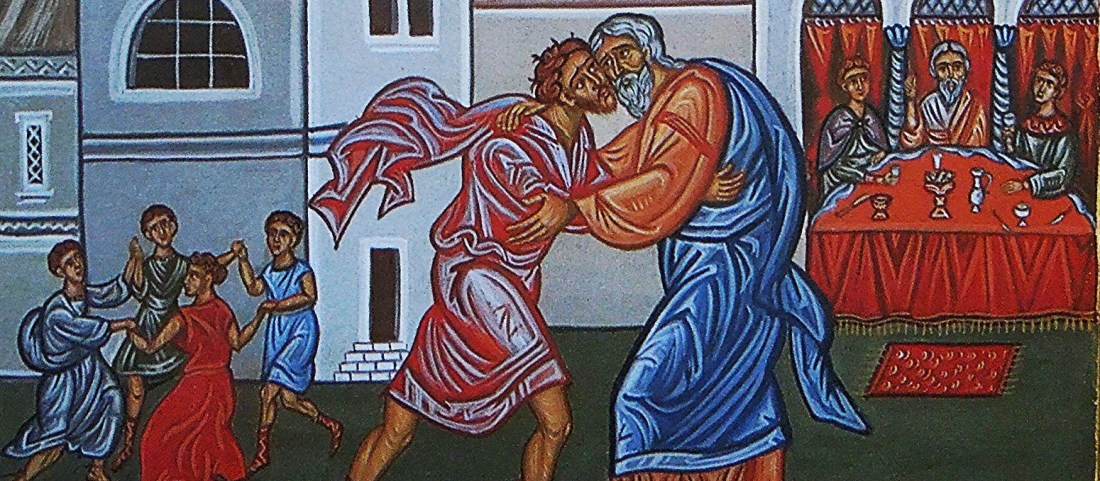
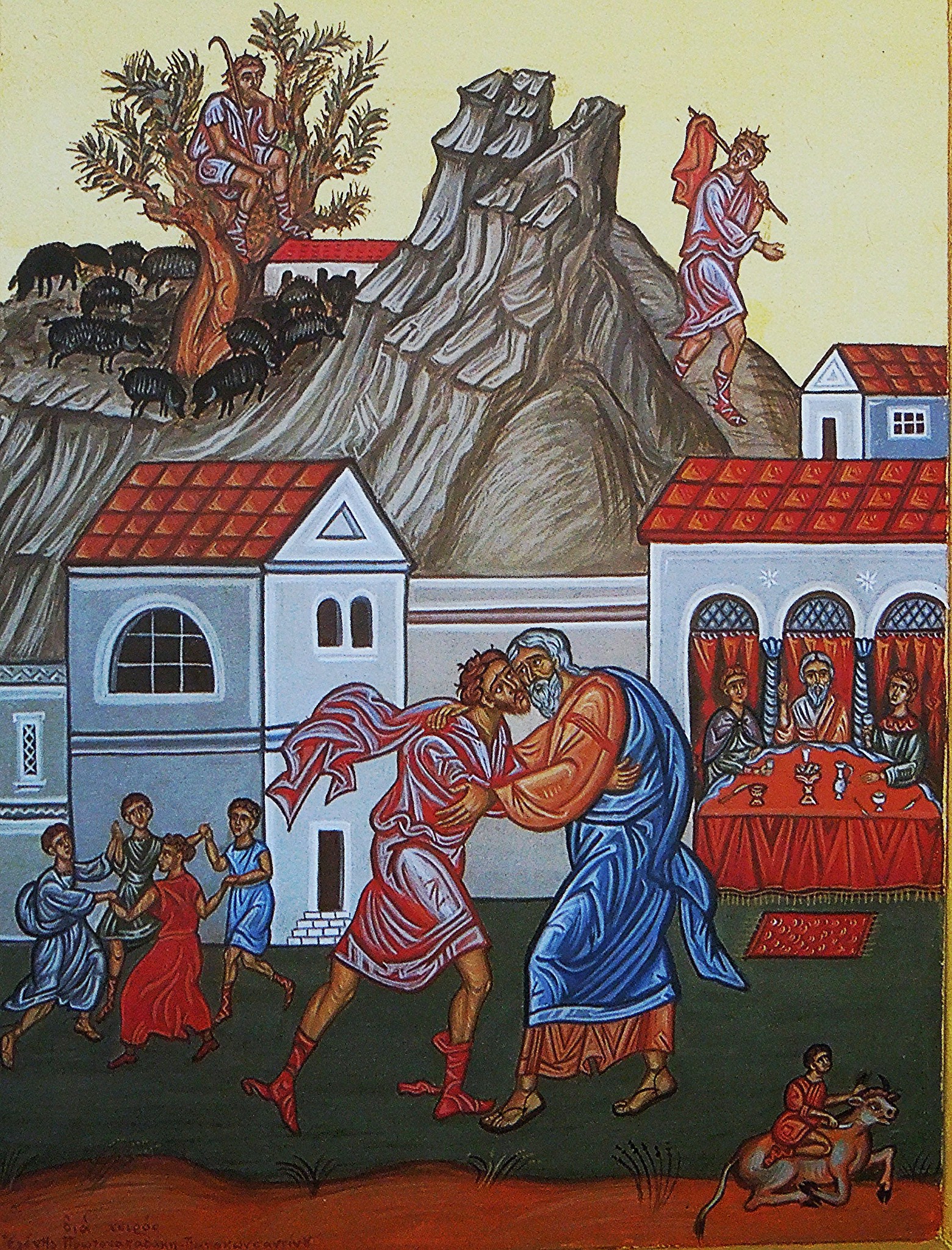
This is a great reflection on The Prodigal Son — perhaps the most important story for us in the Gospels.

Michael K. Marsh's avatarInterrupting the Silence

Several years ago I was teaching a class about today’s gospel (Luke 15:1-3, 11-32), the Parable of the Prodigal Son. As soon as class was finished a man who had been sitting in the back of the room started coming toward me. I could tell he was upset. He was probably in his mid-seventies and had been very attentive during class but hadn’t said anything. 

“Prodigal Son icon” by bobosh_t is licensed under CC BY-NC 2.0; Openverse 

What about the bath?
“What about the bath?” he demanded. “You didn’t say anything about the bath. Why didn’t you talk about the bath?” I told him I didn’t understand what he was talking about. He became more agitated and said, “You know where that kid had been!” “Yes,” I said, “in the pig pens of the distant country.” “And you know what he smelled like and what was on…

View original post 1,372 more words

Reimagining Our Lives – A Sermon On Luke 13:1-9 and Exodus 3:1-15

This is fabulous on the meaning of repentance being to enlarge our lives, to do what is ours to do.

Michael K. Marsh's avatarInterrupting the Silence

Woman at sunset contemplating
Photo by Sage Friedman on Unsplash

As I reflected on today’s gospel (Luke 13:1-9) and prepared this sermon I thought about the Russian war on Ukraine, the six million covid deaths worldwide, the collision between a pick up truck and a van that killed nine last Tuesday, the death of my son and other tragedies in my life. 

Not much has changed since the time of Jesus. Tyrants are still acting, towers are still falling, and tragedies are still happening.

For me, those kind of events continue to raise questions about God, fairness, and mortality.

  • They challenge my beliefs, hopes, and illusions that there is some all-knowing, all powerful, Big Other, Magical Other, out there who, if I just believe, pray, and behave rightly, will make sure none of that happens to me or those I care about.
  • They contradict my notions of fairness and that you…

View original post 1,212 more words